Water Damage FAQ: Causes, Categories, Costs and Drying Times
Ten in-depth answers covering what water damage really is, how professionals classify and remove it, what it costs in Florida, and how long proper drying takes.
What is water damage, in one paragraph?
Water damage is what happens when water ends up inside building materials that were never meant to stay wet. It spreads by gravity and wicking, weakens drywall, wood and flooring, and in Florida's humidity it starts growing mold within 24 to 48 hours. Professional restoration stops the source, extracts the water, dries the structure to verified meter readings, and repairs what could not be saved.
The questions below are the ones our technicians answer on job sites every week, written the way we would explain them at your kitchen table. For response and safety steps, see the emergency response FAQ. For claim deadlines and paperwork, see the insurance documentation FAQ.
Understanding the water in your home
Water damage is any harm water causes to building materials or belongings when it goes somewhere it does not belong: into drywall, flooring, cabinets, insulation or electrical systems. In Florida the most common causes are burst pipes and failed supply lines, slab leaks under concrete floors, AC condensate overflows, roof leaks during heavy rain, appliance failures and storm flooding. The damage is rarely just the visible puddle. Water wicks upward through drywall, travels under flooring and soaks insulation, so the affected area is nearly always larger than what you can see or feel on the surface.
Restoration professionals classify water by contamination. Category 1 is clean water from a sanitary source, like a broken supply line. Category 2, or gray water, carries chemicals or biological matter, like dishwasher or washing machine discharge. Category 3, or black water, is grossly contaminated, such as flood water or drain backups, and requires strict protective protocols. The category decides how a job is handled: which materials can be dried and saved, which must be removed, what protective equipment the crew wears, and how the space is cleaned before anyone uses it again.
Immediately. Water damage is a race on two clocks. The first is spread: water keeps migrating through materials by gravity and capillary action, so a one-room problem becomes a three-room problem in a day. The second is biological: in Florida's warmth and humidity, mold can begin growing on wet drywall, wood and dust within 24 to 48 hours. Fast extraction and same-day drying setup routinely cut total restoration costs in half compared with waiting a weekend, and they often decide whether flooring and cabinets can be saved or must be replaced.
How professionals get a home dry again
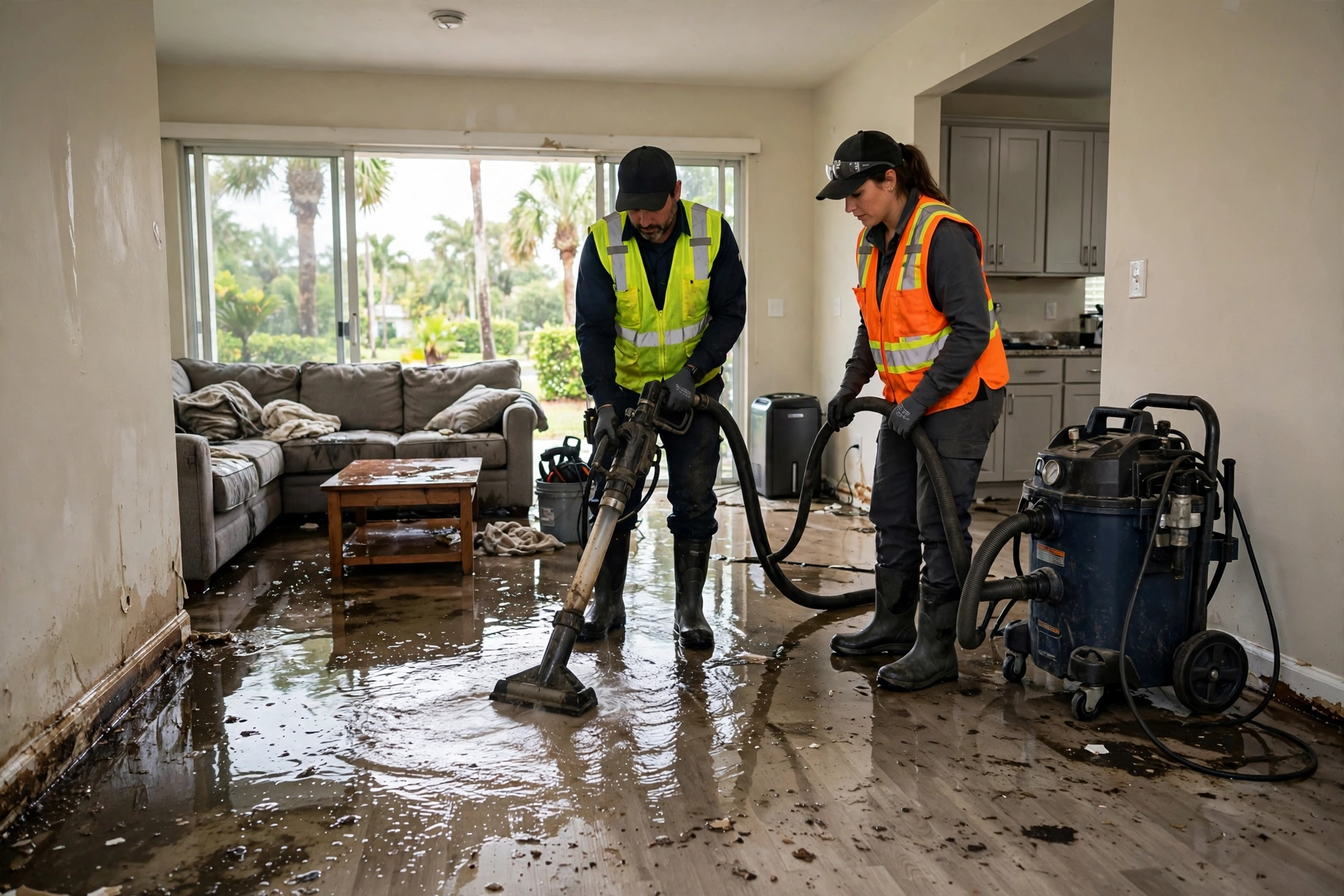
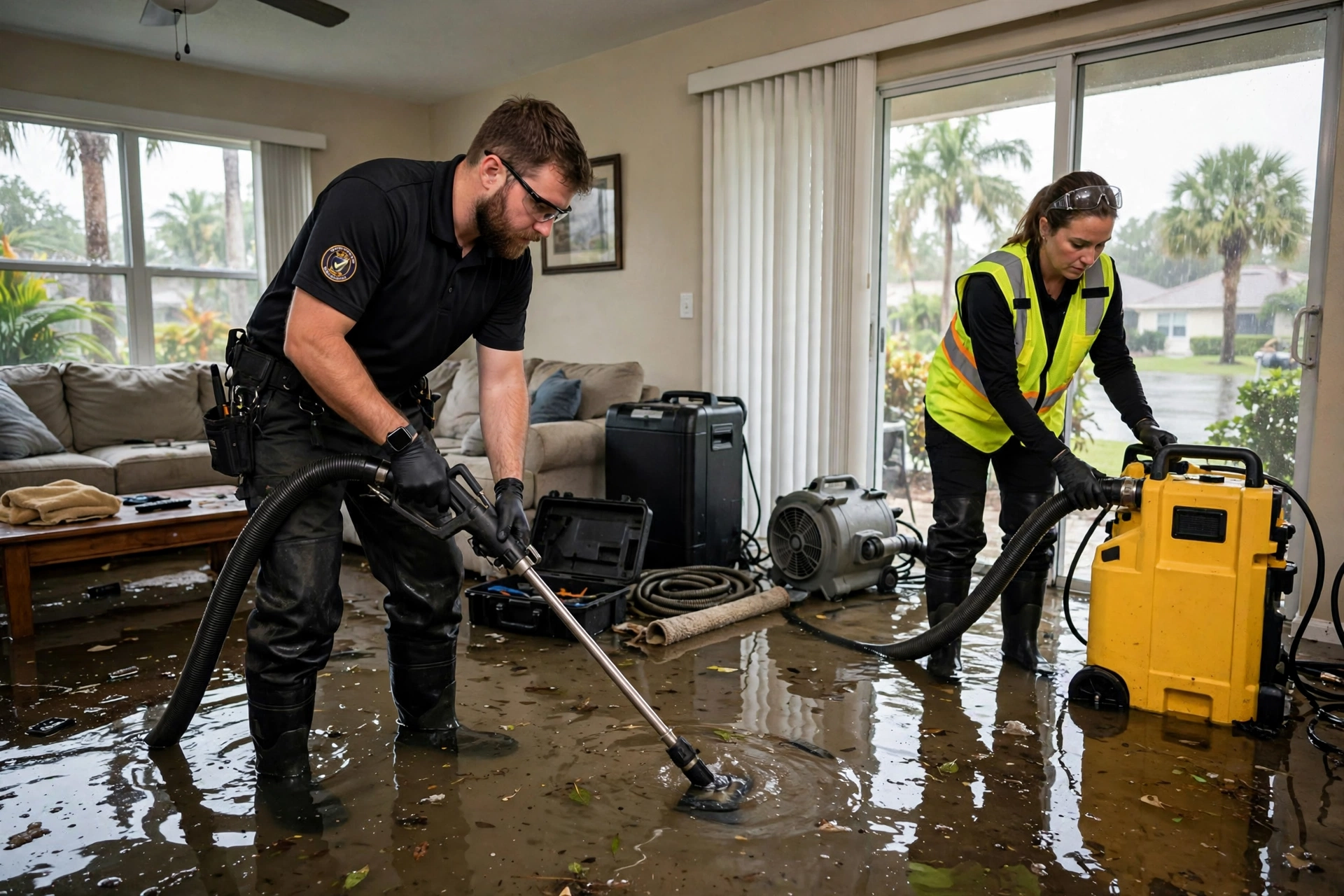
Extraction is the mechanical removal of standing and trapped water, and it removes far more water than drying alone ever could. Crews use truck-mounted or portable extractors for open water, weighted extraction tools that squeeze water out of carpet and pad, and specialty wands for water trapped under tile, wood and vinyl. Technicians also move or block furniture, protect unaffected areas, and take the first moisture readings that map exactly how far the water traveled. Thorough extraction is not optional prep work; it is what makes the drying phase fast and affordable. Read more about our water extraction service.
Most Florida homes reach verified drying goals in 3 to 5 days. The timeline depends on the materials involved: drywall and carpet dry relatively quickly, while hardwood floors, plaster walls, concrete slabs and tile over wood subfloors hold moisture much longer and can extend drying to a week or more. Your crew measures moisture daily and removes equipment only when readings match the dry standard of unaffected materials. Anyone who quotes you a fixed number of days before seeing meter readings is guessing; real drying is measured, not scheduled. See how structural drying works.
Money questions and the leaks you cannot see
For a typical Florida home, emergency water extraction runs about $1,500 to $4,500, structural drying for a multi-room loss runs $2,000 to $6,000, and full restoration after major flooding, including drywall, flooring and cabinetry repairs, commonly reaches $5,000 to $15,000 or more. As a rough guide, professional mitigation often falls between $3 and $7.50 per affected square foot. The honest answer for your home comes from a free inspection that ends with a written scope and a price range before any work begins.
Homeowners insurance usually covers water damage that is sudden and accidental: a pipe that bursts, a water heater that fails, a supply hose that lets go. It typically excludes damage that developed gradually, like a slow leak under a sink that rotted the cabinet over months, because that is considered a maintenance issue. Water that rises from outside the home is flood damage and needs a separate flood insurance policy. Document the source, photograph everything, and report promptly: in Florida you generally have one year from the date of loss to notify your insurer.
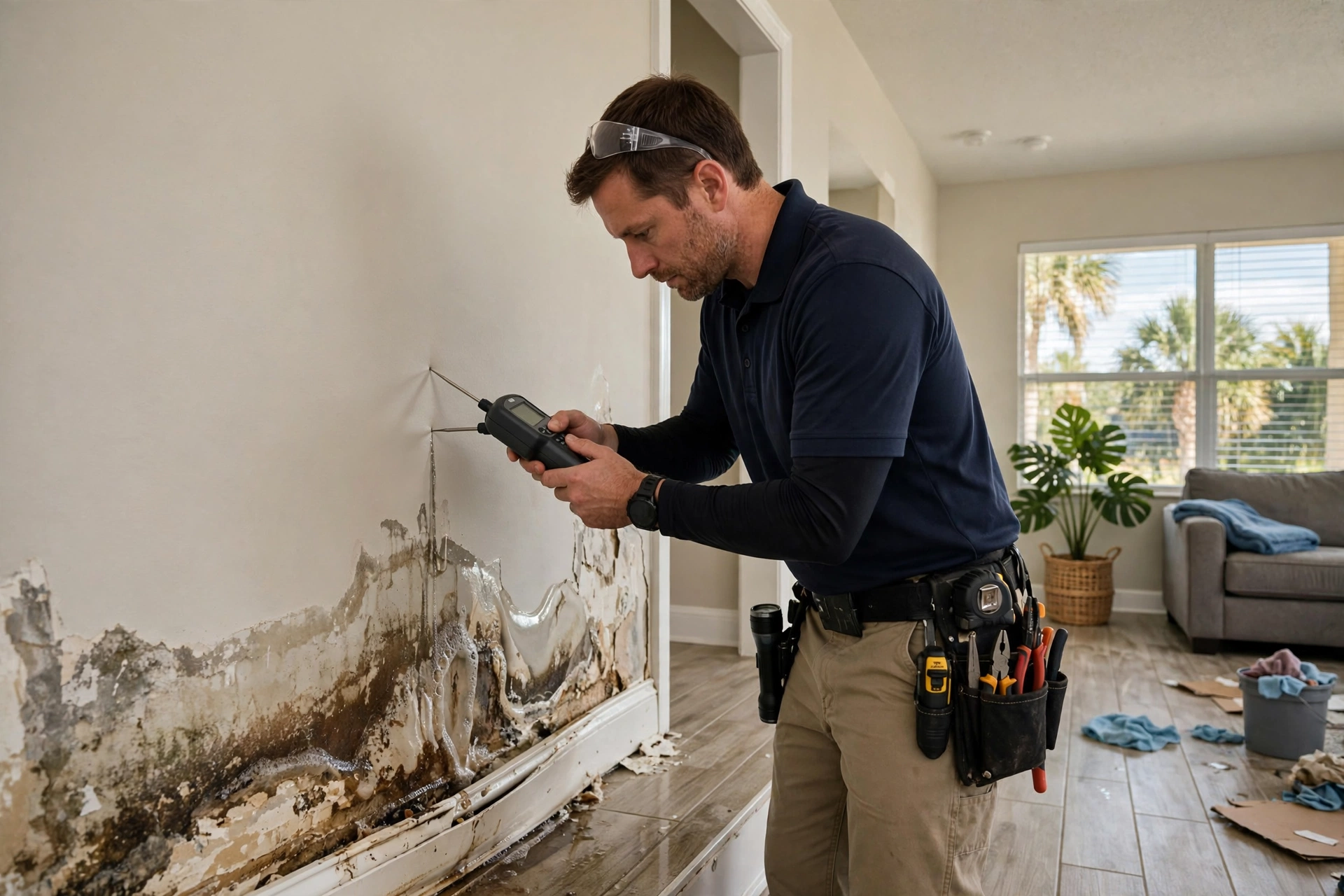
A slab leak is a break in a water line running under your home's concrete slab foundation, which is how most Florida homes are built. Warning signs include a water bill that jumps without explanation, the sound of running water when nothing is on, warm or damp spots on the floor, low water pressure, and cracks appearing in tile or flooring. Because the leak is hidden, it can soak the slab and wick into walls for weeks. Professionals confirm and locate slab leaks with pressure testing and acoustic or thermal equipment, then extract and dry the structure. See our burst pipe and leak cleanup page.
Florida air conditioners run almost year-round and pull gallons of moisture from the air every day. That condensate drains through a line that slowly clogs with algae and sediment. When it blocks, water backs up into the drain pan and overflows, often into a closet, ceiling or wall cavity, and it can drip for weeks before a stain appears. A failed float switch makes it worse by letting the unit keep running. Prevention is simple: have the condensate line flushed during routine AC service, and treat any water near the air handler as an inspection call, not a mop-up. More on AC leak water damage.
It is not too late to restore the home, but expect a bigger job. Water that sat for weeks has usually wicked through entire wall assemblies, saturated insulation and flooring, and given mold a long head start on wet materials. The restoration approach is the same, extraction, removal of unsalvageable materials, then verified drying and repairs, but more material typically has to come out. Call for an inspection before you run the AC or start tearing things out yourself, and document conditions carefully, since late discovery is exactly where insurance documentation matters most.
Dealing with water damage right now?
Skip the reading and get a crew moving. Free inspection, written scope, and 24/7 live dispatch across 293 Florida cities.
Call 24/7: (607) 300-1334