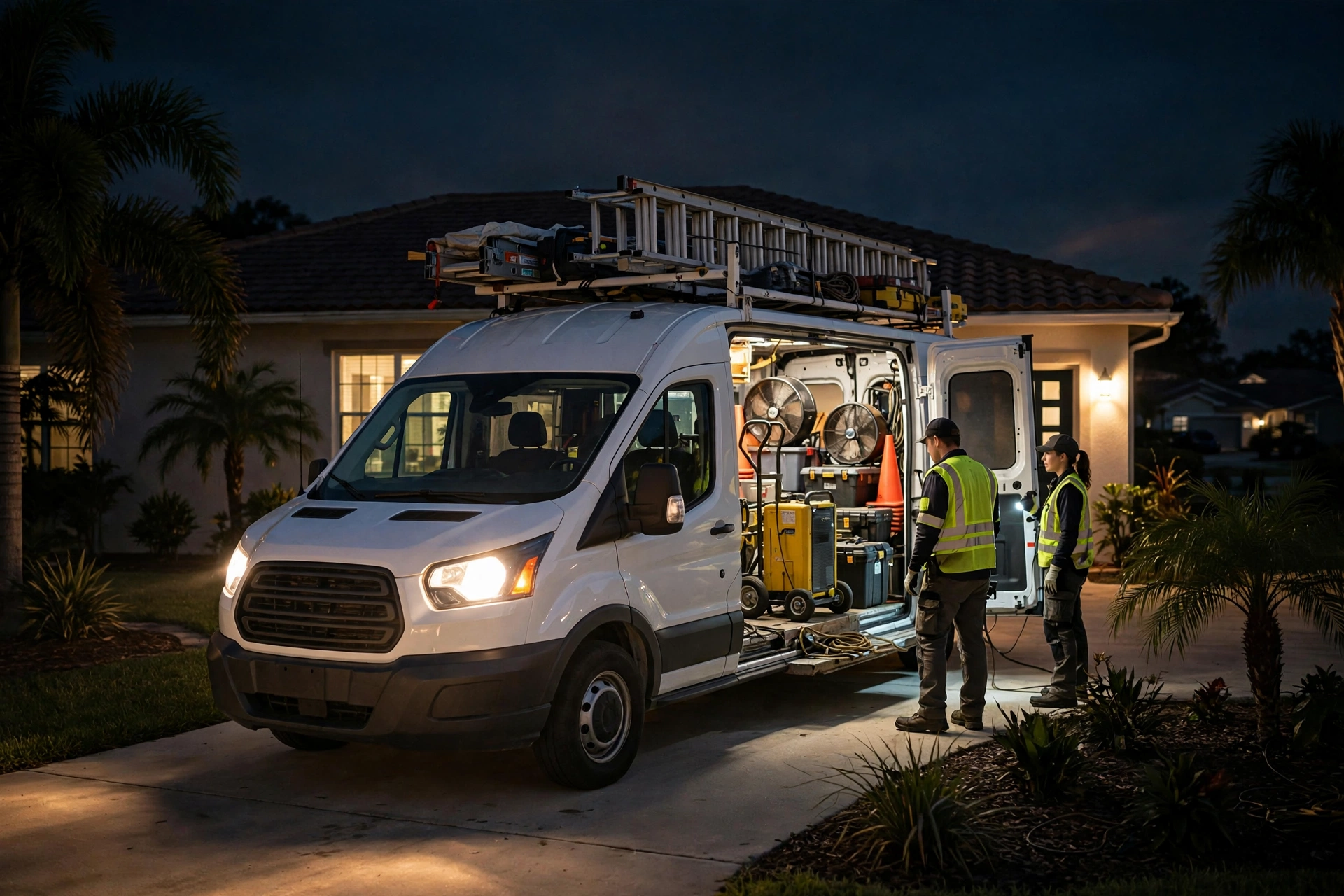
Water Emergency FAQ: What to Do Before the Crew Arrives
Response times, the exact steps to take while you wait, how to shut off water and power safely, and what happens in the crew's first hour.
The fastest help is one call away
Call (607) 300-1334 now. A live dispatcher answers 24/7, sends the nearest crew from our network across 293 Florida cities, and tells you exactly what to do while you wait. Do not wait for morning: every hour of standing water raises the repair bill and the mold risk.
The questions below cover everything that happens between the moment you find the water and the moment the crew walks in: how fast we get there, what to shut off, what to move, what to photograph, and what the crew does in that critical first hour. Read more about our 24/7 emergency restoration service.
Your water emergency action guide
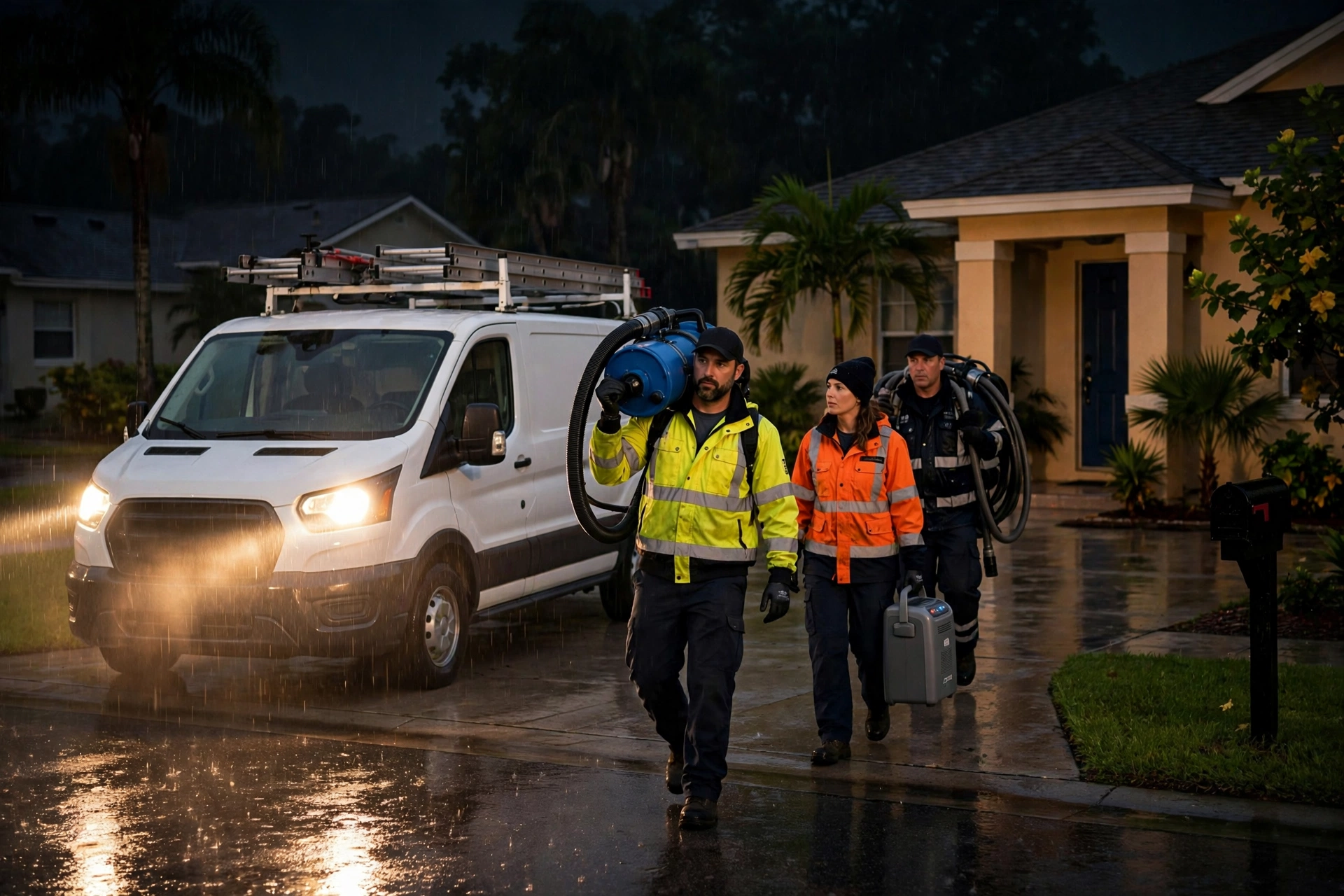
DryOut Inc targets a 60-minute arrival for active water emergencies in core Florida service areas, with crews stationed across 293 Florida cities so the nearest team rolls to your address. The dispatcher gives you a real ETA on the call. After major storms, demand is higher, but emergency calls are triaged by active water flow, electrical risk and occupied homes first.
Stop the water source if it is safe, turn off electricity to the wet area at the breaker, and move furniture, rugs and valuables out of the water. Prop up or wrap furniture legs to slow wicking, and open doors between rooms so the crew can move equipment in quickly. Do not use the home vacuum cleaner on standing water, and avoid the wet area if water is near outlets, the electrical panel or appliances.
In most Florida homes the main shutoff is on the exterior wall where the water line enters, often near the front of the house or by the water meter, or in the garage. It is usually a lever handle, turn it a quarter turn so it sits perpendicular to the pipe, or a round wheel, which you turn clockwise. Closing it stops all water flowing into the house. If you cannot find it, close the individual supply valves at the leaking fixture instead, and tell the dispatcher so the crew brings shutoff tools.
Yes, turn off power to the wet area at the breaker panel if you can reach the panel without walking through water. Electricity and water are the most dangerous combination in a water emergency, and submerged outlets, cords and appliances can energize standing water. Never touch a wet breaker box, pull cords from submerged outlets, or walk through standing water toward electrical equipment. When in doubt, wait outside for the crew. More in our water damage safety guide.
Your name, address and a callback number, what the water source is (pipe, AC, roof, storm flooding), which rooms are affected, whether water is still flowing, whether the power is off in the wet area, and whether anyone in the home is elderly, disabled or in need of medical equipment. If you can, send photos of the damage by text while you talk; it helps the crew load the right equipment before they roll.
Never wade through standing water that touches outlets, cords or appliances. Never try to drain water through walls by punching holes yourself, because you may hit wiring or release trapped contaminated water. Do not use fans to dry contaminated water, which can spread it. And do not throw away damaged items before they are photographed and documented for your insurance claim.
Yes. The emergency line is answered live 24 hours a day, including weekends and holidays, by a real dispatcher. Water emergencies do not keep office hours, and neither do our crews. The same free inspection, written scope and response priority apply at 2 a.m. as at 2 p.m.
Yes, and you should. Text photos and short videos of the water, the affected rooms and the suspected source to the dispatcher. They go straight to the responding crew, who can confirm the right equipment and, in some cases, start sizing the drying plan before arrival. Photos also strengthen your insurance documentation.
The lead technician walks the affected area with you, identifies the water source, and takes moisture readings to map how far the water traveled. Then the crew starts extraction immediately, moving or blocking furniture and pulling standing water with professional extractors. Before they leave that first visit, the drying plan is set, equipment is placed, and you have a written scope with a price range, so you know exactly what happens next. Read how emergency water extraction works.
Water emergency right now? Do not wait.
Call and get a live dispatcher, a real ETA, and a crew rolling to your address in minutes.
Call 24/7: (607) 300-1334