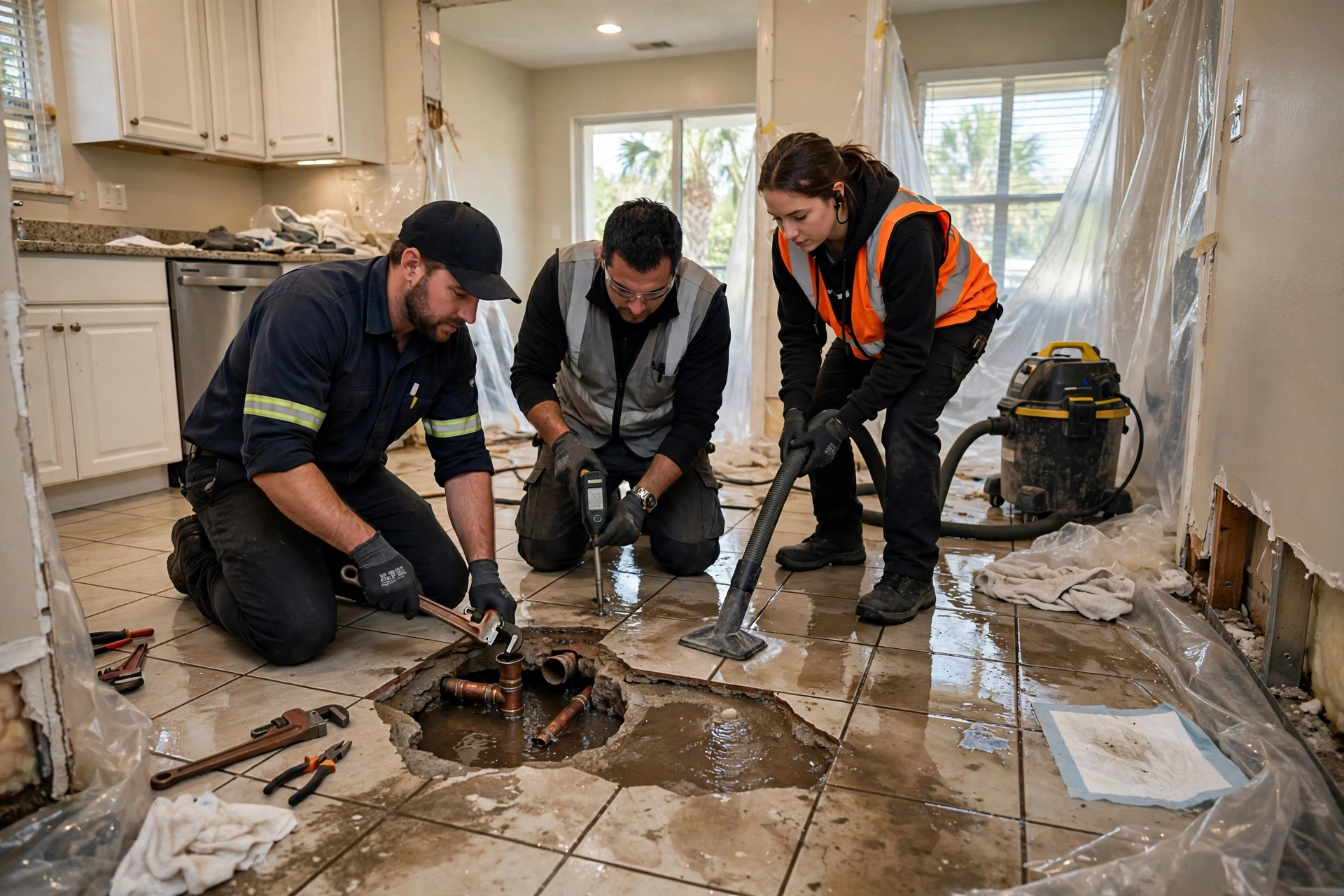
Structural drying equipment with air movers and dehumidifiers in a Florida home

Structural Drying in Florida

Drying is a science, not a waiting game. We use psychrometrics, commercial dehumidification and daily meter verification to dry Florida structures to IICRC S500 standards.

The science of dry

Drying done by measurement, not by guesswork

Quick answer

Structural drying is the controlled evaporation and dehumidification of wet building materials after water extraction. Technicians use psychrometrics, the science of air and moisture, to calculate how much airflow and dehumidification a structure needs, place air movers and commercial dehumidifiers accordingly, and monitor moisture readings daily until materials reach the dry standards defined by the ANSI/IICRC S500 standard.

Anyone can rent fans. What separates professional drying is knowing the target. Every material in your home has a normal, dry moisture content, and a proper drying job ends when the wet materials return to that baseline, verified with instruments, not when the surface feels dry to the touch. Drywall that reads dry on the surface can still hide a soaked wall cavity behind it.

Florida makes this harder than almost anywhere else. Outdoor air here often carries more moisture than the wet building itself, so simply opening windows or running fans can actually slow drying or push humid air into cavities. Controlled drying means sealing the environment, removing moisture from the air with commercial dehumidifiers, and driving evaporation from materials at a rate the air can actually absorb.
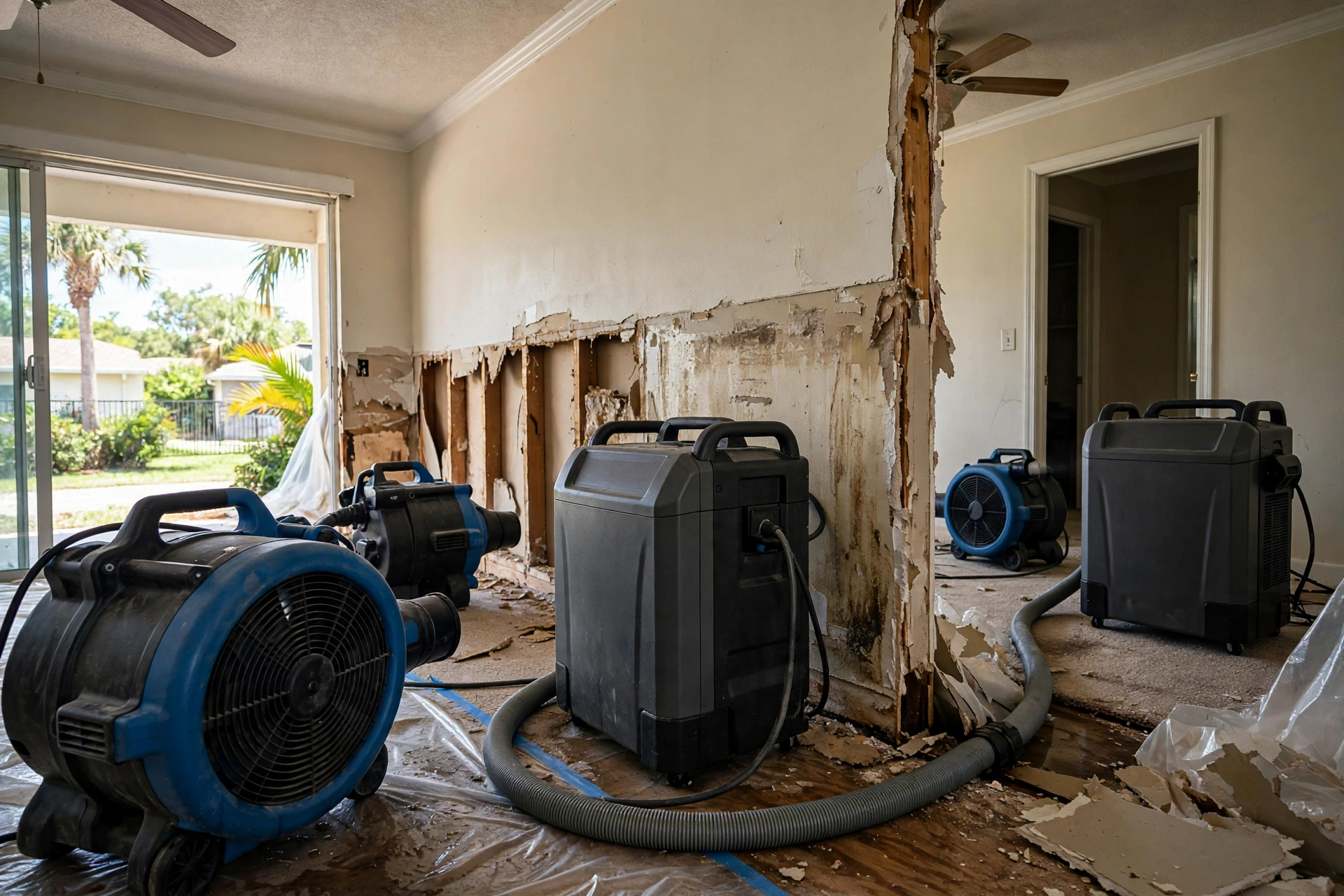
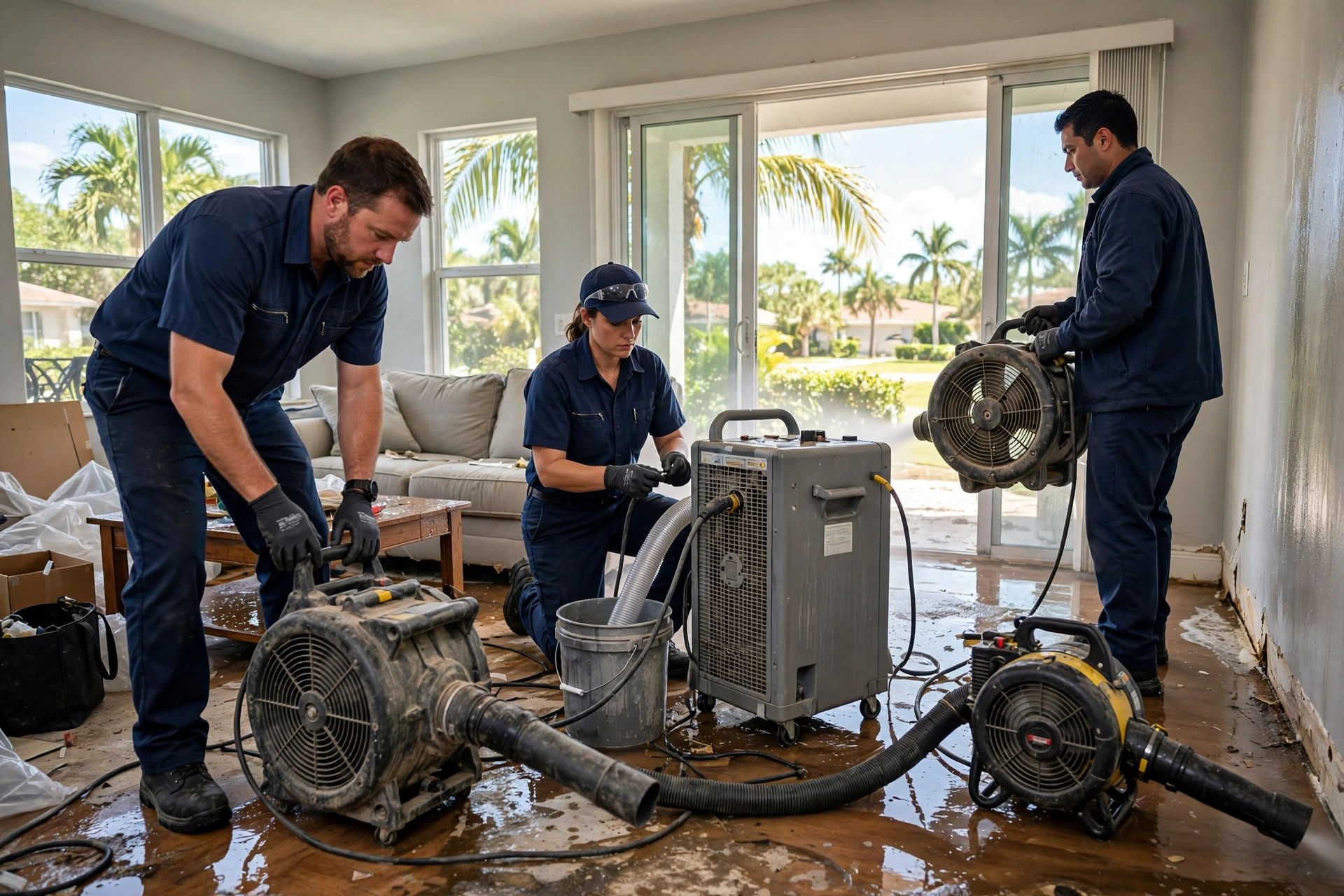
DryOut Inc structural drying service at a Florida property in Orlando
Drying plans are calculated per structure, not copied per job
Psychrometrics in plain language

The four factors that decide how fast your home dries

Every drying decision on your job comes back to these four measured variables. This is the same framework the IICRC teaches and certifies.

Humidity ratio

The actual weight of water vapor in the air, measured in grains per pound. Dehumidifiers must keep the air dry enough that wet materials can release moisture into it. If the air is already saturated, evaporation stops no matter how many fans run.

Airflow

Air movers push a thin layer of dry air across wet surfaces, breaking the saturated boundary layer so evaporation can continue. Placement angle and spacing matter as much as fan count, and wrong placement can blow moisture into clean areas.

Temperature

Warm air holds more moisture and warm materials evaporate faster. Managing the temperature of the drying chamber, often with the building's own HVAC or supplemental heat, speeds the whole system.

Dehumidification capacity

Dehumidifiers are rated in pints of water removed per day. The class of your water loss and the cubic footage of the space decide how many pints of capacity must be on site from day one.

Class of loss

An IICRC Class 1 loss (little absorbed water) needs far less equipment than a Class 3 or 4, where ceilings, walls and dense materials like hardwood or concrete hold deep moisture that releases slowly.

Material permeability

Paint, vinyl wallpaper and sealed finishes act as vapor barriers that trap moisture inside walls. Knowing when to open a cavity or use directed heat and negative pressure is what dries these assemblies instead of cooking them.

Slab and subfloor structural drying in an Orlando Florida home
Dense materials like slab and hardwood dry slowly and need directed drying
The equipment plan

Air movers, dehumidifiers and directed drying systems

A typical DryOut Inc drying setup combines several tools, each with a specific job:

  • Low-profile air movers create the airflow layer across floors, walls and ceilings, positioned from the measured moisture map rather than by habit.
  • LGR refrigerant dehumidifiers pull large volumes of moisture from the air in warm Florida conditions and are the workhorse of most residential jobs.
  • Desiccant dehumidifiers achieve the very low humidity needed for dense materials and Class 4 losses, where refrigerant units stall out.
  • Wall cavity drying systems push dry air into wall assemblies through small access points, often saving drywall that would otherwise be removed.
  • Floor drying mats use negative pressure to draw moisture out of hardwood and assemblies where top-down airflow cannot reach.
  • HEPA air scrubbers filter the air while drying disturbs dust and particulates, keeping indoor air quality under control.
Daily monitoring

How we prove your structure is dry

Drying without documentation is just equipment rental. Every DryOut Inc drying job includes a monitoring file that grows daily.

  1. Baseline readings on day oneWe record moisture content of affected materials and unaffected control points in your home, plus temperature and relative humidity of the drying chamber.
  2. Daily meter checksA technician returns every day to re-read the same points, graph the drying progress, and verify the equipment is performing as calculated.
  3. Adjustments as conditions changeIf a wall cavity lags or the chamber humidity stalls, we add cavity drying, change dehumidification, or open the assembly. The plan adapts to the readings, not the calendar.
  4. Verified completionWhen all points reach dry standard, equipment comes out. The final readings, photos and drying log are documented for you and your insurance file.

Most residential drying completes in three to five days. Dense materials (Class 4) and large commercial spaces can take longer. What never changes is the standard: the job ends when the meters say it ends. See how this fits the full water damage restoration process, or read our guide to insurance documentation.

What improper drying costs

The risks of the fan-and-wait approach

Under-drying is the most expensive mistake in water damage. Moisture left in wall cavities and under floors does not evaporate into Florida's humid air; it migrates, feeds mold growth that can begin within 24 to 48 hours, delaminates flooring, swells cabinetry and corrodes fasteners and wiring over the following months.

Over-aggressive drying has its own risks: excessive heat and airflow can crack finishes, warp millwork and overshoot energy costs. The answer is not more equipment; it is measured equipment, monitored daily. That is the entire philosophy behind IICRC S500, and it is how every DryOut Inc drying job is run.

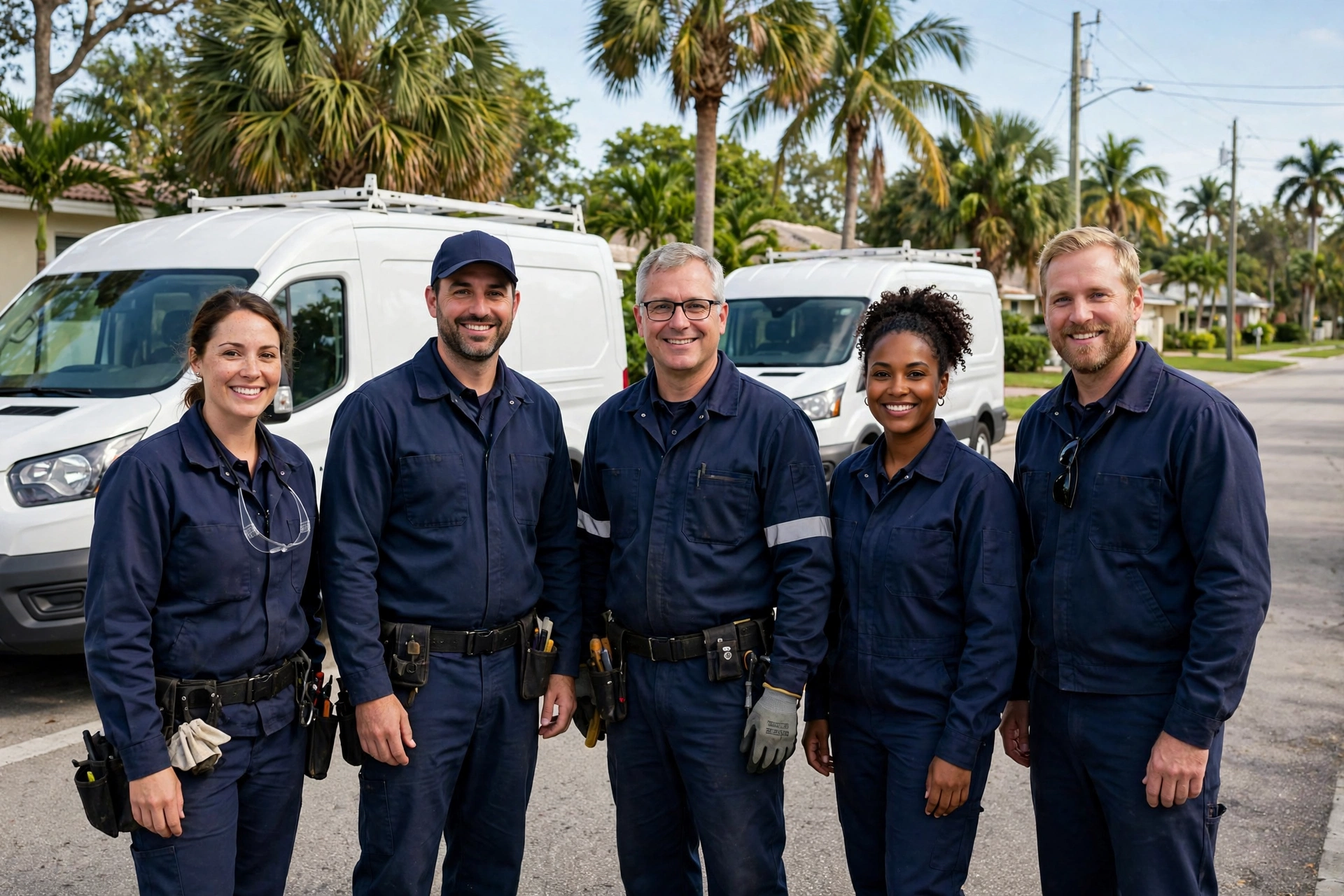
DryOut Inc team providing structural drying across Florida
Certified drying technicians, stationed across Florida
FAQ

Structural drying FAQs

Most residential water losses dry in three to five days of equipment time. Class 4 losses involving hardwood, concrete slab or plaster can take a week or more because dense materials release moisture slowly. Your technician confirms the timeline from daily meter readings rather than guessing a date on day one.

The ANSI/IICRC S500 standard defines professional water damage restoration procedures, including how dry is dry enough. In practice, affected materials must return to a moisture content comparable to unaffected materials in the same building, verified with calibrated meters. We document those readings at completion.

Household fans move air but cannot control humidity, and consumer dehumidifiers remove a fraction of the water a commercial LGR unit removes. In Florida's ambient humidity, DIY drying often leaves wall cavities and subfloors wet while surfaces feel dry, which is exactly where mold establishes itself. Professional drying is calculated, sealed and verified.

Often, yes, if drying starts fast. Wall cavity systems can dry drywall in place, and floor mats can pull moisture from hardwood before cupping becomes permanent. The deciding factors are how long the material stayed wet, the water category, and whether the finish acts as a vapor barrier. Your free inspection gives you an honest assessment of what can be saved.

Structural drying for a typical multi-room Florida loss generally runs $2,000 to $6,000, driven by the class of loss, the materials involved and the number of drying days. Your written scope after the free inspection states your specific range before work begins, and the drying log supports the line items in your insurance claim.

Wet walls do not fix themselves.

In Florida humidity, trapped moisture means mold and rot. Get verified structural drying started today with a free inspection.

Call 24/7: (607) 300-1334