Water damage restoration crew extracting flood water from a Florida home

Water Damage Restoration in Florida

Standing water, burst pipes, storm flooding or a hidden leak? DryOut Inc extracts, dries and restores Florida homes and businesses 24/7, with free inspections and IICRC-certified crews.

293Florida cities served
777ZIP codes covered
24/7Live emergency dispatch
60 minResponse target, core areas
The flagship service

What water damage restoration actually involves

Quick answer

Water damage restoration is the complete process of returning a water-damaged property to its pre-loss condition: emergency water extraction, controlled structural drying verified with moisture meters, cleaning and sanitizing affected areas, and repairing or rebuilding damaged materials. In Florida, fast extraction followed by verified drying is what prevents a manageable leak from becoming a major reconstruction job, because mold can begin growing within 24 to 48 hours in our humidity.

Most people picture restoration as drying equipment and fans. The equipment matters, but the discipline matters more. Proper water damage restoration follows a sequence that cannot be shortcut: find and stop the water source, remove standing water completely, dry the structure to measured targets, verify those targets with instruments, and only then repair finishes. Skip the verification step and moisture stays trapped behind walls and under floors, where it feeds mold growth and rots framing silently for months.

DryOut Inc handles the entire sequence with one accountable team. Our technicians train to the ANSI/IICRC S500 Standard for Professional Water Damage Restoration, the industry's benchmark for how water losses should be handled. Every job is documented with photos and moisture readings, so you and your insurance adjuster can see exactly what was wet, what was dried, and what was verified dry before equipment left your property.
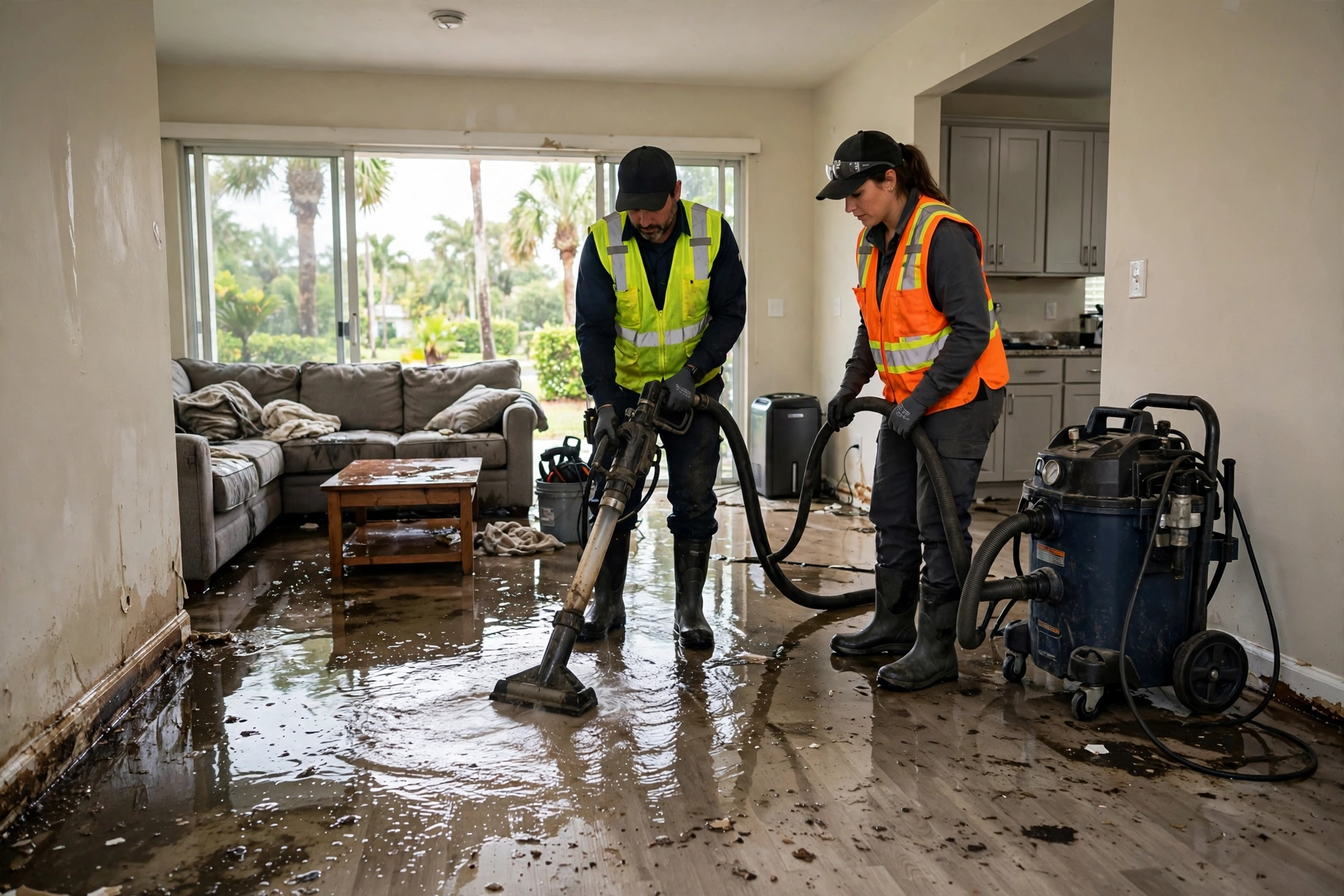
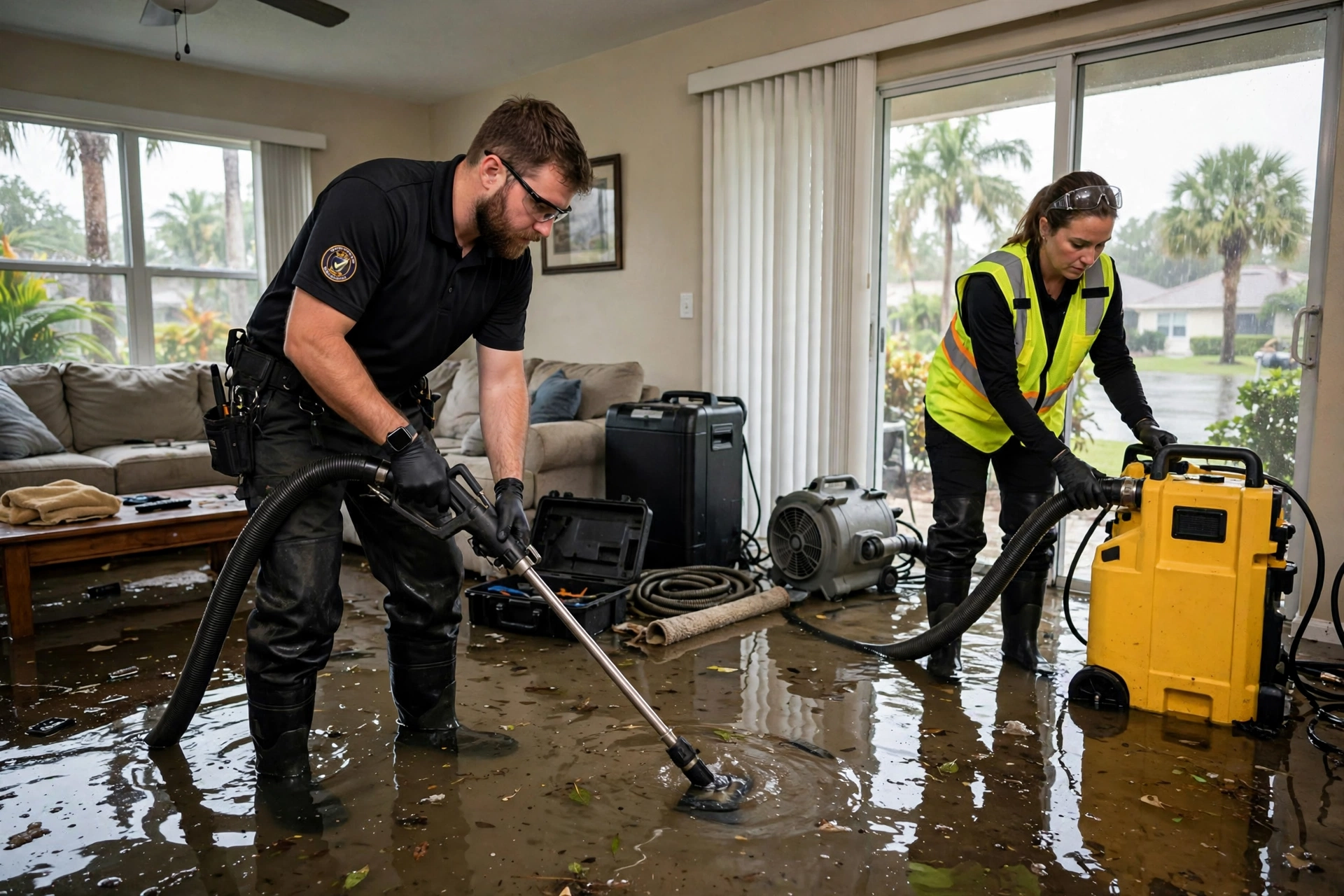
Technicians performing water damage restoration with extraction equipment in a Florida home
Extraction is always the first step of a proper restoration
Know what you are dealing with

Water damage categories and classes

Restoration professionals classify every water loss by contamination category and by class. The category decides the safety precautions and what must be removed. The class decides how much drying equipment the job needs.

Category 1: Clean water

Water from a clean source such as a broken supply line, a tub overflow with no contaminants, or melting ice. It starts sanitary but degrades fast: left sitting in Florida heat, Category 1 water can become Category 2 within 48 hours as bacteria multiply.

Category 2: Gray water

Water with significant contamination, such as washing machine discharge, dishwasher overflow or toilet overflow containing urine but no feces. Gray water can cause illness on contact or ingestion, and porous materials it touches generally must be removed rather than dried.

Category 3: Black water

Grossly contaminated water, including floodwater from storms, rising groundwater and other grossly contaminated sources. It carries bacteria, viruses and other pathogens. Restoration requires full protective equipment, removal of affected porous materials, and thorough disinfection of everything that remains.

ClassWhat it meansTypical Florida example
Class 1Least water absorbed; only part of a room affected, minimal porous materials wetA small supply-line leak caught the same day on tile flooring
Class 2Large amount of water absorbed; carpet, cushions and structural materials wetA water heater failure flooding several rooms of carpeted space
Class 3Greatest amount of water; ceilings, walls, insulation and subfloor saturated, often from overheadA roof leak or upstairs bathroom flood soaking the ceiling below
Class 4Deeply held water in dense materials like hardwood, plaster, concrete and subfloorStanding water that sat for days on hardwood or a slab foundation

The category and class of your loss determine the safety plan and the equipment layout. This is why a professional assessment with moisture meters matters more than a quick visual check.

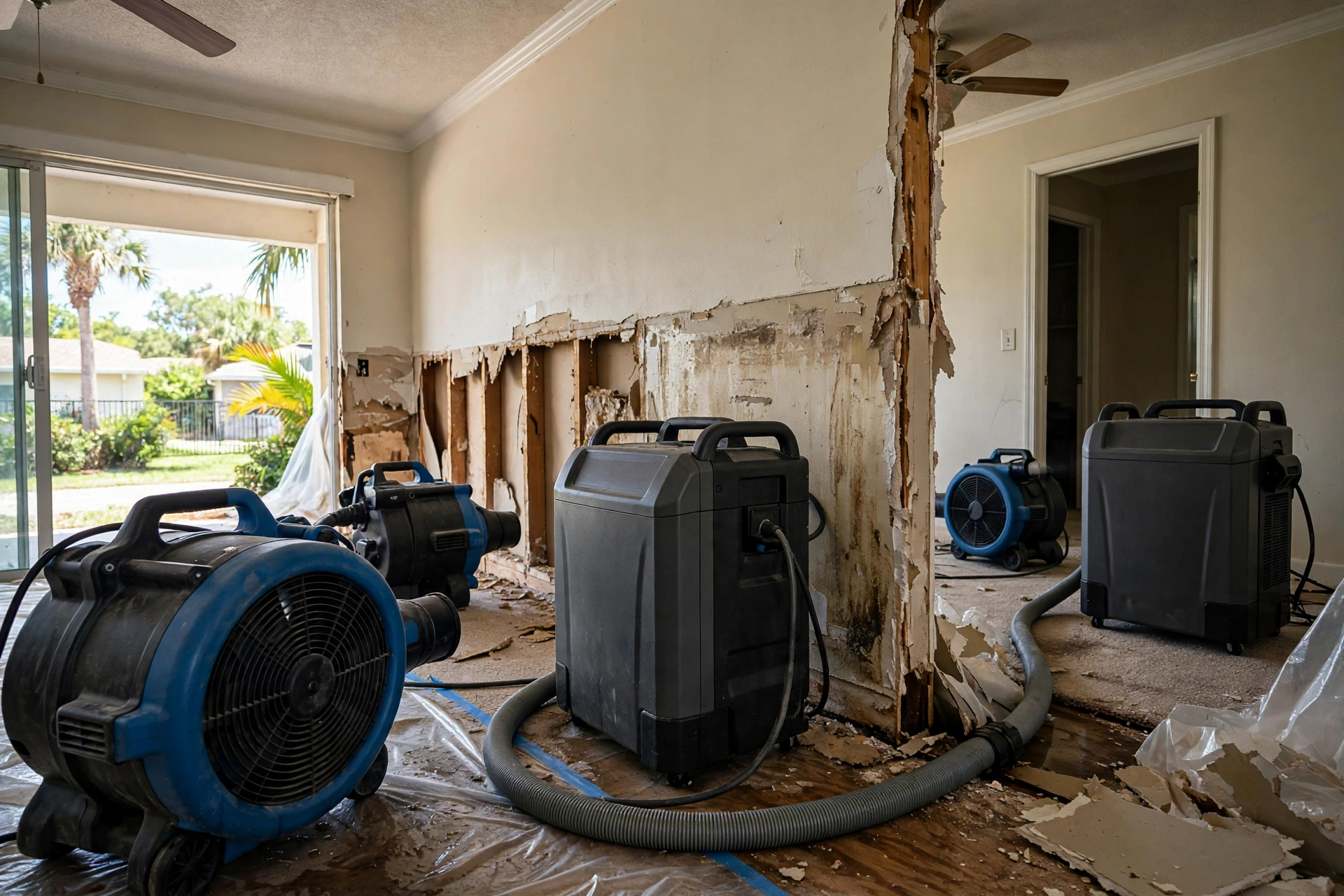
Air movers and commercial dehumidifiers drying a water damaged Florida home
Controlled drying with commercial equipment, monitored daily
Florida-specific causes

Why Florida homes flood so often

Florida combines nearly year-round air conditioning, slab-on-grade construction, afternoon downpours and a six-month hurricane season. Each one creates water losses the rest of the country rarely sees:

  • Burst supply lines and slab leaks. Aging copper, polybutylene and corroded fittings fail under Florida's hard water and high pressure. Slab leaks send water straight up through flooring.
  • AC condensate overflows. Air conditioners run almost constantly and produce gallons of condensate daily. One clogged drain line floods closets, walls and ceilings for weeks before discovery.
  • Storm and hurricane flooding. June through November, tropical systems drive surge, wind-driven rain and street flooding into ground floors across the state.
  • Roof leaks. Intense downpours exploit failed flashing and cracked tiles. Water travels along rafters and appears rooms away from the entry point.
  • Appliance failures. Water heaters, dishwashers and ice-maker lines fail silently. Vacation homes can sit wet for weeks between visits.
How it works

Our water damage restoration process

The same disciplined sequence on a one-room leak and a whole-house flood.

  1. Emergency contact and dispatchYour call is answered live, 24/7. We triage the loss by phone or text, and for active water emergencies we target a 60-minute arrival in core areas.
  2. Inspection and moisture mappingTechnicians locate the source, then map every wet area with pin and pinless moisture meters and thermal imaging, including wall cavities and subfloor you cannot see.
  3. Water extractionStanding water comes out first with truck-mounted or portable extractors, weighted extraction tools for carpet, and submersible pumps for deep water. Extraction removes the bulk of the water fast, which shortens drying by days.
  4. Controlled structural dryingAir movers and commercial dehumidifiers are placed using psychrometric calculations, then monitored and adjusted daily until moisture readings hit IICRC S500 dry standards.
  5. Cleaning and sanitizingAffected surfaces are cleaned and treated with EPA-registered antimicrobials where the water category requires it, and the air is filtered to control odor and particulates.
  6. Restoration and final walkthroughDamaged drywall, flooring, trim and paint are repaired or replaced. We verify dryness one final time, document everything for your insurer, and walk the finished work with you.
Honest pricing

What water damage restoration costs in Florida

Typical ranges from Florida jobs. Your free inspection includes your specific price range in writing before work begins.

ServiceTypical rangeWhat changes the price
Emergency water extraction$1,500 to $4,500Water volume, rooms affected, flooring type
Structural drying (multi-room)$2,000 to $6,000Materials involved, drying days required
Flood cleanup after storms$2,500 to $9,000Contamination category, debris and materials removed
Burst pipe drying and repair$2,000 to $7,500Pipe location, flooring and drywall replacement
Full restoration with rebuild$5,000 to $15,000+Area size, material choices, reconstruction scope

Estimates from common Florida jobs, not quotes. We scope in Xactimate, the platform most insurers use, so pricing aligns with what carriers expect. Learn how we document water damage for insurance claims.

Statewide coverage

Water damage restoration across 293 Florida cities

Our coverage is not a vague service radius. DryOut Inc crews serve 293 Florida cities and 777 ZIP codes, from Miami and Fort Lauderdale to Orlando, Tampa, Jacksonville and the Panhandle. Every city page lists the exact ZIP codes covered there, so you know before you call whether we reach your address.

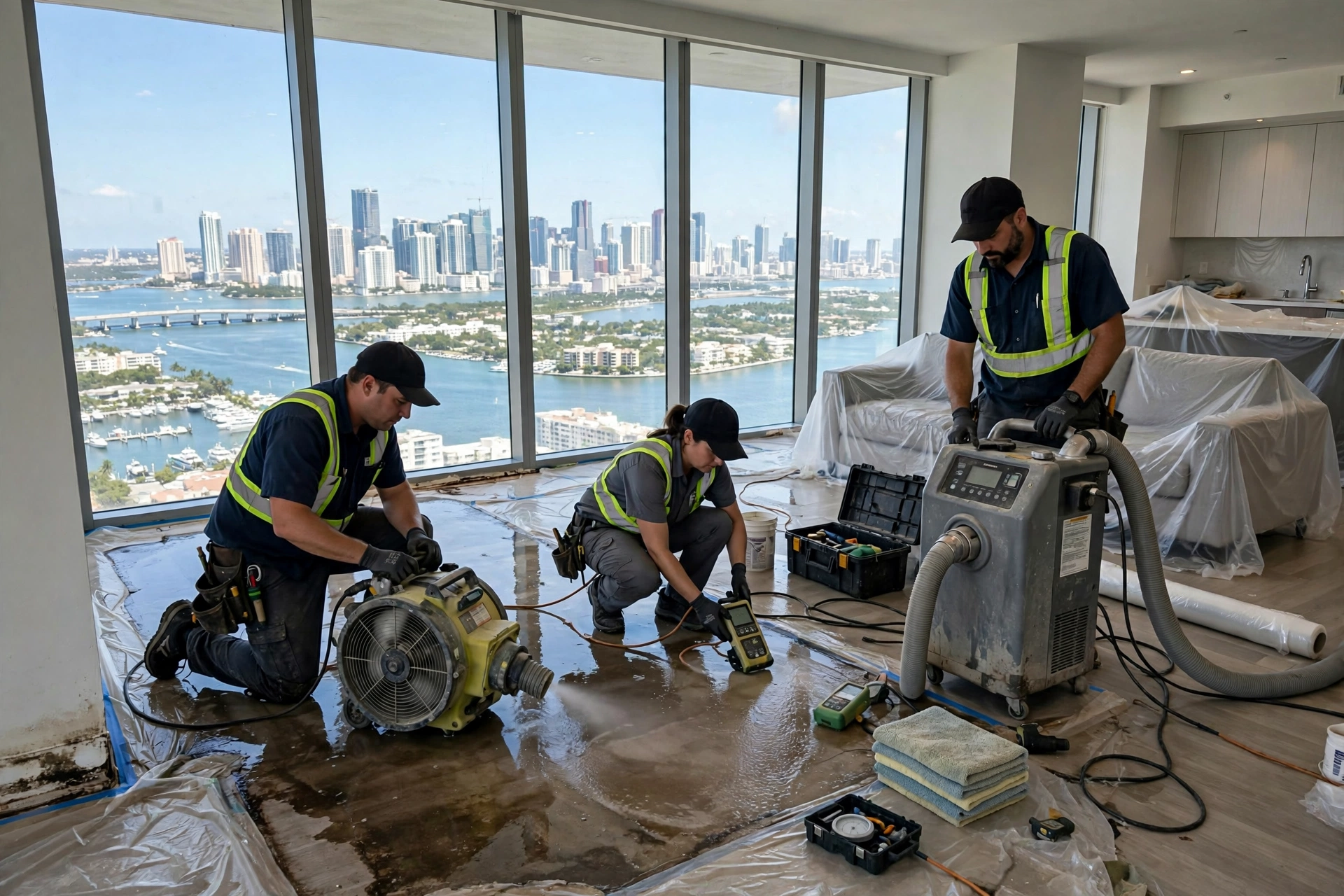
Water damage restoration in a Miami Florida condo building
Serving condos, homes and businesses statewide
FAQ

Water damage restoration FAQs

Full water damage restoration includes stopping the water source, emergency water extraction, controlled structural drying verified with moisture meters, cleaning and sanitizing affected areas, and repairing or rebuilding damaged drywall, flooring and finishes. DryOut Inc handles the complete sequence with one team, documented for your insurance claim.

Immediately. In Florida's humidity, mold can begin growing within 24 to 48 hours of a water event, and standing water keeps wicking into drywall and subfloor the entire time it sits. Fast extraction followed by verified drying is what keeps a $2,000 drying job from becoming a $15,000 reconstruction.

Mitigation is the emergency phase: stopping the source, extracting water and drying the structure to prevent further damage. Restoration is the complete job including repairs and rebuilding. DryOut Inc performs both, so you deal with one company from the first call to the final walkthrough.

We take moisture readings with pin and pinless meters at the start and compare them against dry standards for unaffected materials in your home, following IICRC S500 procedures. Equipment is only removed when readings confirm the structure has reached its drying goal, and the results are documented for your records and your insurer.

It depends on the cause of loss and your policy. Sudden and accidental events like burst pipes are typically covered, while gradual leaks and long-term seepage often are not. Florida generally gives you one year from the date of loss to file a claim. We document everything in Xactimate to support your claim; see our insurance claims assistance page for the full process.

Yes. We restore single-family homes, condos and HOA properties, as well as offices, retail spaces, restaurants and multi-unit buildings across Florida. Commercial jobs get the same documented process, scaled with larger equipment and phased work to limit business interruption.

Water spreads fast. So do we.

Every hour of standing water raises the repair bill and the mold risk. Get a free inspection from Florida's water damage team today.

Call 24/7: (607) 300-1334