
Roof Leak Water Damage in Florida
The stain on your ceiling is rarely under the leak. We trace roof leak water to its entry point, dry the attic, insulation and drywall, and repair the damage for good.
Why the stain is not where the leak is
Roof leak water rarely drips straight down. It enters at a failed flashing, cracked tile or lifted shingle, then travels along rafters, joints and the top of the ceiling drywall before it finds a low point and shows as a stain, sometimes rooms away from the entry point. Proper roof leak restoration traces the water path with moisture meters and thermal imaging, dries the attic insulation and ceiling assembly, and repairs the interior damage only after everything verifies dry.
Florida roofs work hard. Daily summer downpours dump inches of rain in an hour, hurricane-season wind drives rain sideways under tiles and shingles, and relentless sun and heat age sealants and flashing years faster than in northern climates. The result is a steady pattern of leaks at roof penetrations: vents, chimneys, skylights, valley joints and the flashing around AC and plumbing stacks.
Inside, the damage compounds quietly. Wet insulation loses its insulating value and holds moisture against the ceiling drywall, which softens, sags and stains. Cabinets and walls under the leak path absorb water at their tops where nobody looks. By the time paint bubbles, the assembly above has usually been wet through multiple storms.
Signs your roof leak is damaging the structure
Some signs are obvious, some are easy to miss. Any of these after a Florida storm season deserves an inspection.
| Sign | What it usually means | Urgency |
|---|---|---|
| Brown or yellow ceiling stain | Water has saturated the ceiling drywall repeatedly; insulation above is wet | High: active structural wetting |
| Bubbling or peeling paint | Moisture vapor pushing through finishes from a wet cavity behind | High: cavity is holding water |
| Sagging ceiling section | Drywall has absorbed enough water to lose strength; pooled water may be above it | Critical: collapse risk, call immediately |
| Musty attic odor | Wet insulation and decking have been damp long enough for microbial growth to begin | Moderate to high: source must be found |
| Drips during heavy rain only | Wind-driven rain entry at flashing or tile, common in Florida downpours | Moderate: pattern will worsen each storm |
| Stains on exterior walls under eaves | Gutter overflow or eave flashing failure channeling water into the wall top | Moderate: wall cavity likely wet |
Trace, dry, then repair
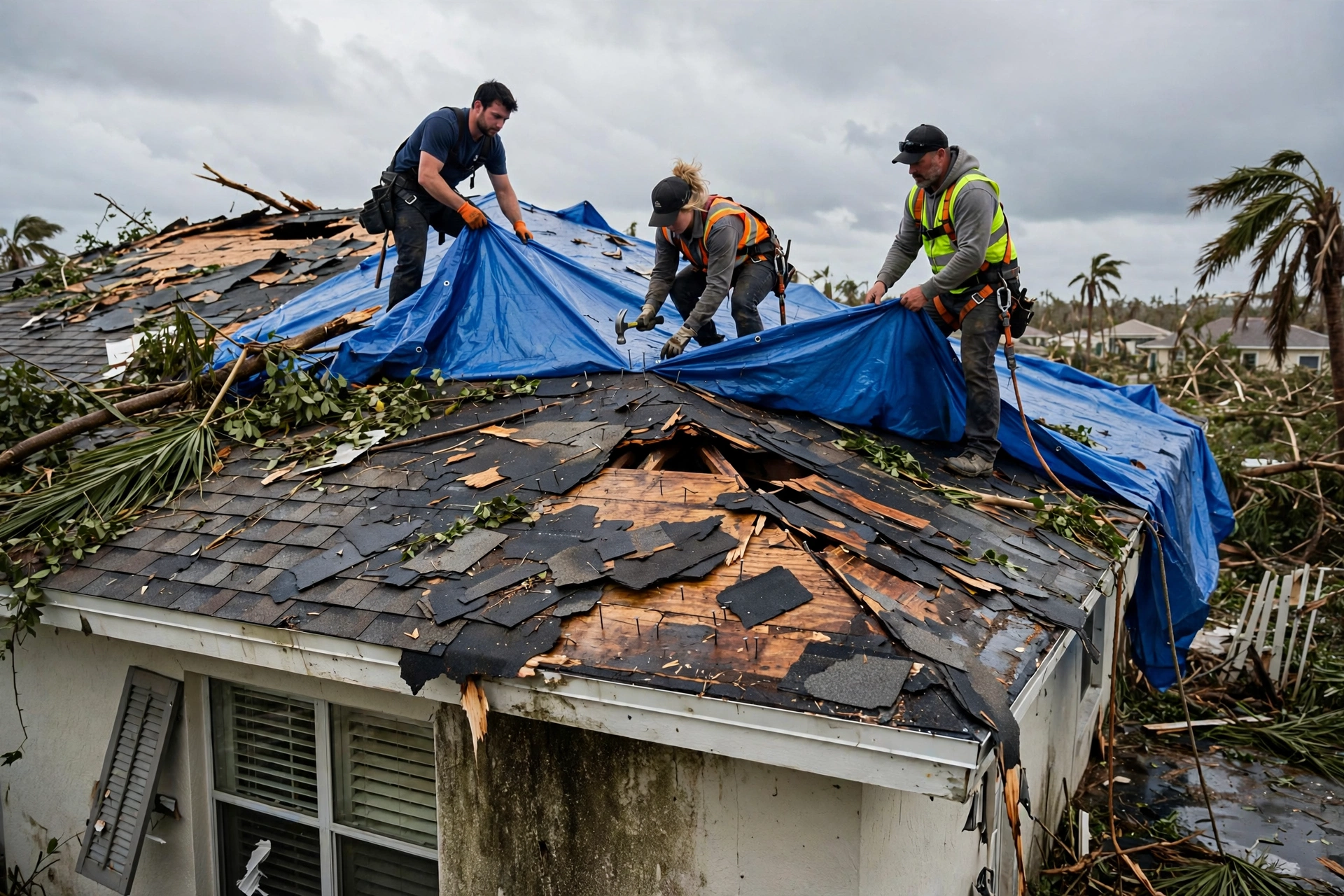
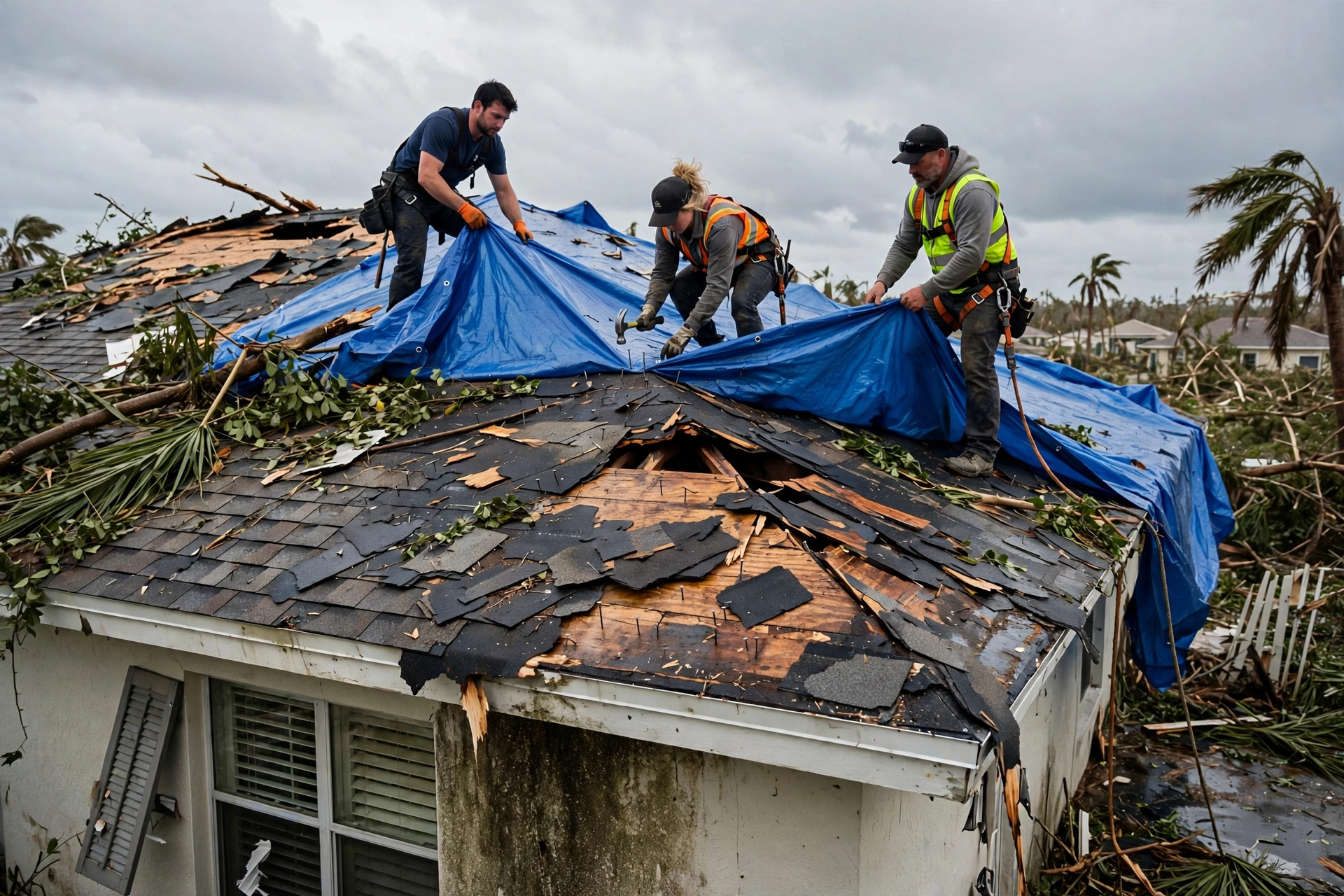
- Secure the roofIf the roof is actively leaking or storm-damaged, we arrange emergency tarping or temporary sealing so no more water enters while interior work proceeds.
- Trace the water pathMoisture meters and thermal imaging follow the wet trail from the stain back through the ceiling assembly and attic to the probable entry point.
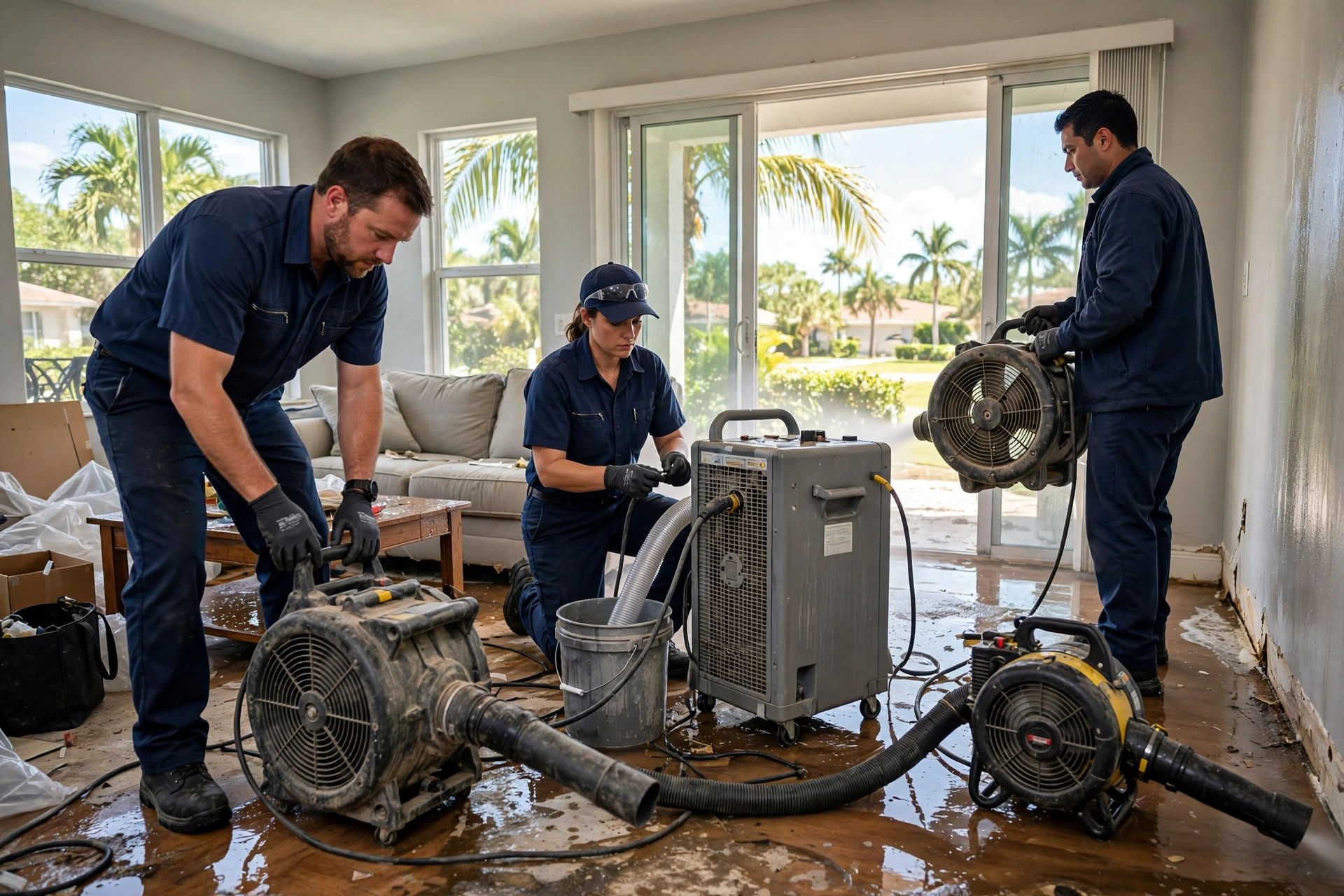
- Dry the assemblyWet insulation is removed if saturated or dried in place when viable; ceiling and wall cavities are dried with directed airflow and dehumidification until readings verify dry.
- Repair the interiorDamaged drywall is replaced, textures matched, and paint restored. The final moisture verification is documented for your insurance claim.
What happens to wet attic insulation
Blown-in fiberglass and cellulose insulation act like a sponge. Once saturated, they mat down, lose most of their R-value, and hold moisture directly against your ceiling drywall and roof decking for weeks. In Florida's heat, that damp, dark, nutrient-rich layer is also where mold establishes fastest, sometimes within 24 to 48 hours of the wetting event.
The correct call depends on material and saturation. Lightly damp fiberglass batts can sometimes be dried in place with directed airflow. Saturated blown-in insulation almost always comes out: it is faster and cheaper to remove, dry the deck and ceiling properly, and blow in fresh insulation at the verified-dry stage than to fight trapped moisture for weeks. Your inspection report will state plainly which applies in your attic and why, with photographs of the conditions we find.
Roof leak FAQs
Water follows gravity along sloped surfaces, rafters and the ceiling plane until it finds a seam or low point to drip through. The visible stain marks where water collected, not where it entered. Tracing with moisture meters and thermal imaging is how the actual entry path, and the full wet area, gets found.
Drywall that has sagged has absorbed enough water to deform and lose strength, and it is normally removed and replaced after the assembly above is dried. A ceiling that is merely stained but still firm and reading dry after verification can often be sealed and repainted. The inspection readings decide, and we explain them to you.
Our scope is the water damage inside your home: tracing, drying and interior restoration, plus emergency tarping to stop further intrusion. Permanent roof repair is done by licensed roofers, and we coordinate timing with them so interior work starts as soon as the roof is watertight.
Florida policies typically cover the interior water damage from a sudden roof failure or storm-created opening, but may exclude the roof repair itself and any damage from long-term deterioration or maintenance neglect. Documentation of the storm event and the interior conditions is critical, and you generally have one year from the date of loss to give notice.
Drying the ceiling and attic assembly usually takes three to five days once the roof is secured. Drywall replacement and finishing add several more days. If saturated insulation must be removed and replaced, allow roughly a week to ten days total for most residential jobs.
A ceiling stain means the damage is already underway.
Water is soaking insulation and drywall above that stain right now. Get it traced and dried before it becomes a ceiling collapse or a mold colony.
Call 24/7: (607) 300-1334