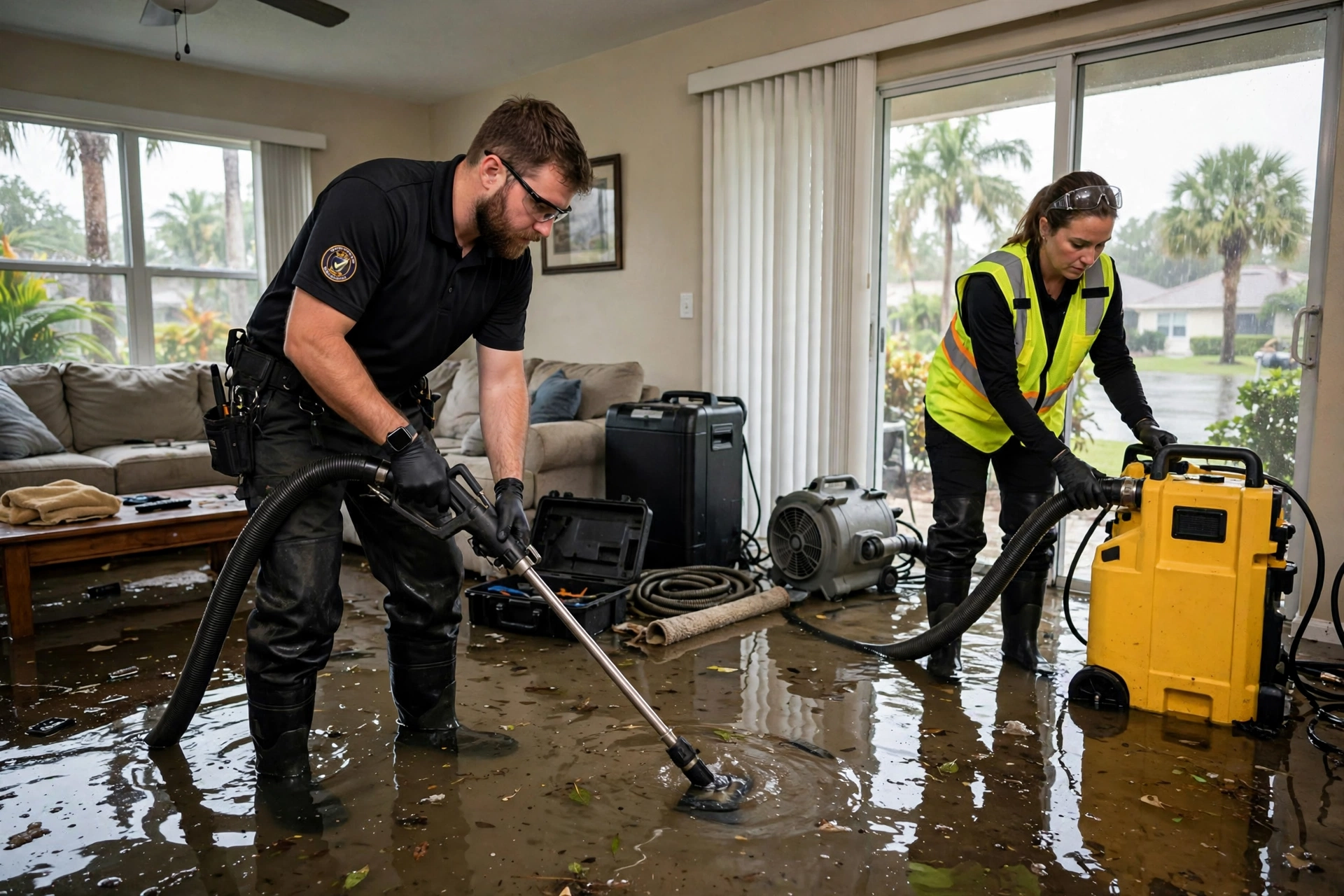
Emergency Water Extraction in Florida
Standing water is an emergency with a clock on it. Our crews pump, extract and remove flood water from Florida homes and businesses 24/7, then set up verified drying before the damage spreads.
Why extraction comes before everything else
Water extraction, also called water removal, is the physical removal of standing and absorbed water from a flooded property, using pumps and vacuum extraction equipment. It must happen before structural drying, because removing water with a vacuum is far faster than evaporating it: every gallon extracted is a gallon the drying equipment never has to handle. In Florida, extraction within the first hours is the single biggest factor in limiting damage and cost.
Homeowners often reach for a shop vacuum or rent a carpet cleaner. Those tools remove surface water from a small spill, but they cannot pull water out of carpet padding, under-floating floors, or from subfloor and wall cavities. A professional extraction unit has dramatically more lift and airflow, and technicians know how to use weighted tools that compress carpet and pad to squeeze water out instead of just skimming the surface.
Extraction also changes what can be saved. Flooring, baseboards and even furniture that would be ruined after a day of sitting in water often survive if the water comes out in the first few hours. And because mold can start growing in Florida within 24 to 48 hours of a water event, fast extraction directly lowers the risk of a much more expensive problem later.
Extraction equipment matched to the water
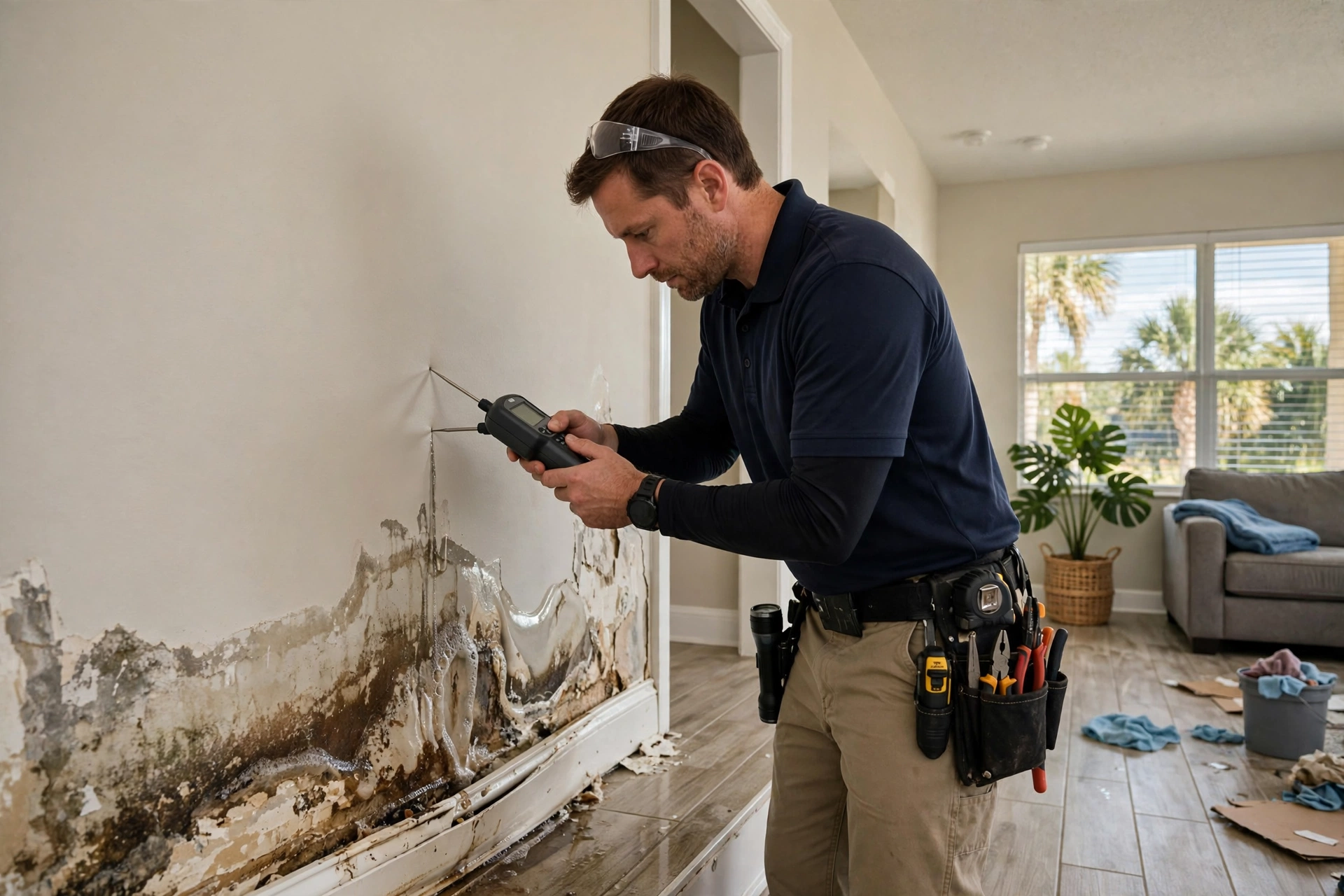
Different surfaces hold water differently. Our trucks carry the full range so the crew on site never has to compromise.
| Equipment | What it removes | Where it is used |
|---|---|---|
| Truck-mounted extractors | Large volumes of standing and absorbed water, fast | Whole-house floods, commercial spaces, deep carpet water |
| Submersible pumps | Standing water deeper than about two inches | Flooded rooms, garages, sunken living areas after storms |
| Weighted extraction tools | Water compressed out of carpet and cushion pad | Carpeted bedrooms and living areas where padding traps water |
| Portable extraction units | Water where truck hoses cannot reach | High-rise condos, upper floors, tight access properties |
| Hard-surface extractors and squeegees | Water film and grout-line moisture | Tile, vinyl and sealed concrete floors common in Florida homes |
| Moisture meters and thermal imaging | Hidden water in walls, cabinets and subfloor | Verification before, during and after extraction |
Extraction is not finished when the floor looks dry. It is finished when meters confirm the absorbed water load is low enough for the drying phase to succeed.
Water under floors, in walls and below the slab
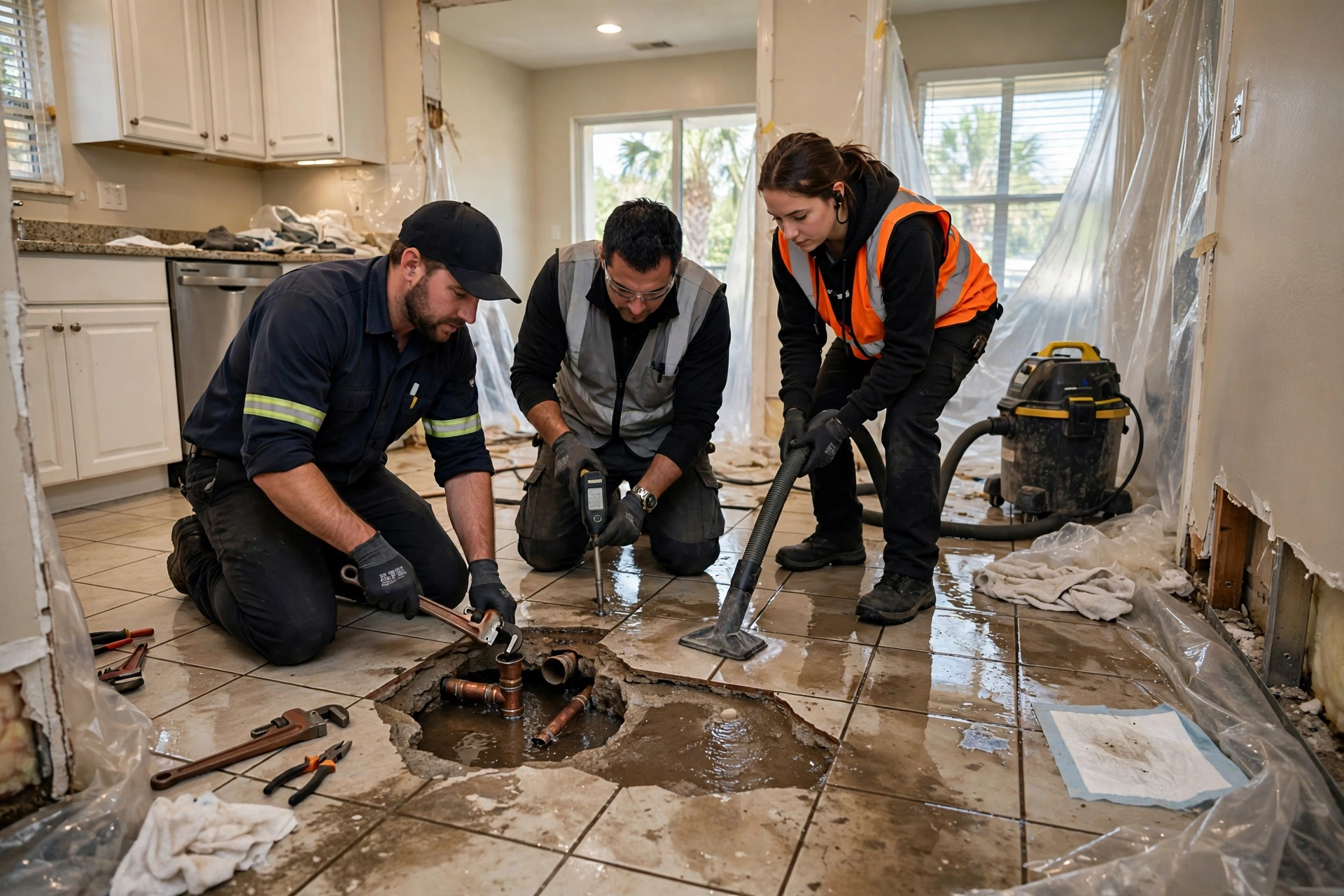
The water you can see is rarely all of it. In Florida's slab-on-grade construction, water travels under tile and floating floors and spreads far beyond the visibly wet area. Laminate and luxury vinyl plank are especially deceptive: they look dry on top while trapping water against the subfloor for days.
Our technicians map the full extent of the water with moisture meters and thermal imaging before extraction starts. Where water is trapped under flooring, we use extraction mats and, when needed, carefully lift sections of flooring so the water can actually come out instead of sitting under a sealed surface. Wall cavities are checked at the baseboard line, and wet insulation is identified so the drying plan can address it rather than ignore it.
- Thermal imaging finds wet areas invisible to the eye
- Pin meters measure moisture deep in wood and framing
- Extraction mats pull water from under hardwood and tile
- Baseboard and toe-kick access points expose cavity water
- Post-extraction readings verify the bulk water is gone
What the first 24 hours should look like
Water damage gets worse on a predictable schedule. Here is how a fast response keeps you on the right side of it.
- Hour 0 to 1: Call and dispatchYou call, we triage by phone or text and dispatch the nearest crew. If it is safe, you shut off the water source and move valuables out of the water.
- Hour 1 to 3: Source stopped, water extractedWe stop the source if it is still running, then remove standing water with pumps and extractors. Most surface and absorbed bulk water is out within this window.
- Hour 3 to 6: Moisture mapped, drying set upThe full wet footprint is mapped with meters, unsalvageable materials are identified, and air movers and dehumidifiers are placed based on the measured water load.
- Hour 6 to 24: Drying under way, documentedEquipment runs continuously. Photos, readings and a written scope are produced for you and your insurer, and the drying plan for the following days is confirmed.
Extraction is the beginning, not the end
Extraction removes the liquid water. It does not dry the structure. Drywall, framing, subfloor and insulation still hold absorbed moisture that will only leave through controlled evaporation and dehumidification. That is the structural drying phase, monitored daily until meters confirm dry standards.
For storm flooding, extraction is combined with our flood cleanup process, which adds debris removal, sanitization and documentation for the contamination floodwater carries. And because every DryOut Inc job is documented from the first photo, your insurance claim file is being built from hour one, not reconstructed later from memory.
Water extraction FAQs
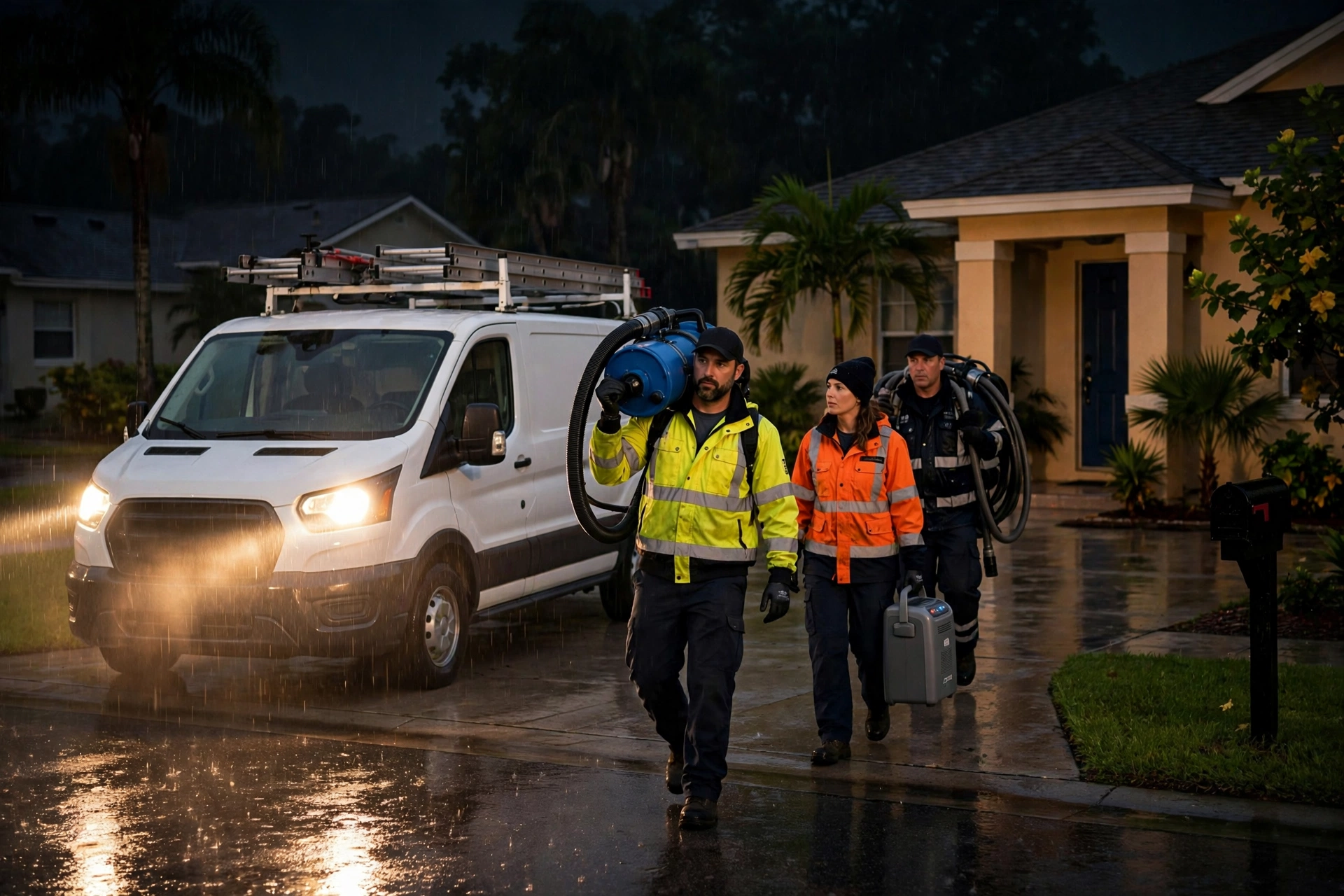
For active water emergencies in our core Florida areas, we target a 60-minute arrival. The emergency line is answered live 24/7, and crews are stationed across our 293-city service area so the nearest team responds, not the nearest office.
For a very small, clean spill on a hard surface, a wet vacuum helps. For anything larger it is not enough: shop vacuums cannot pull water from carpet padding, under floating floors, or out of wall cavities, and they leave the absorbed water that causes the real damage. Professional extraction removes many times more water per pass, which shortens drying and protects materials that would otherwise be lost.
Most residential extraction takes two to six hours depending on water volume, flooring types and how much is trapped under surfaces. Deep storm flooding with pumping can take longer. Once bulk water is out, the drying phase typically runs three to five days with daily monitoring.
Crews move furniture out of wet areas, block and pad items that must stay, and protect unaffected contents before extraction begins. Items that sat in contaminated water are assessed separately, and everything is photographed for your records and insurance documentation.
No. Extraction removes liquid water, but drywall, wood, subfloor and insulation still hold absorbed moisture. Structural drying with air movers and dehumidifiers, verified by meter readings, is what actually returns the building to a safe, dry state.
Every hour of standing water raises the bill.
Water keeps wicking into walls and subfloors until it is physically removed. Call now for emergency extraction anywhere in our Florida service area.
Call 24/7: (607) 300-1334