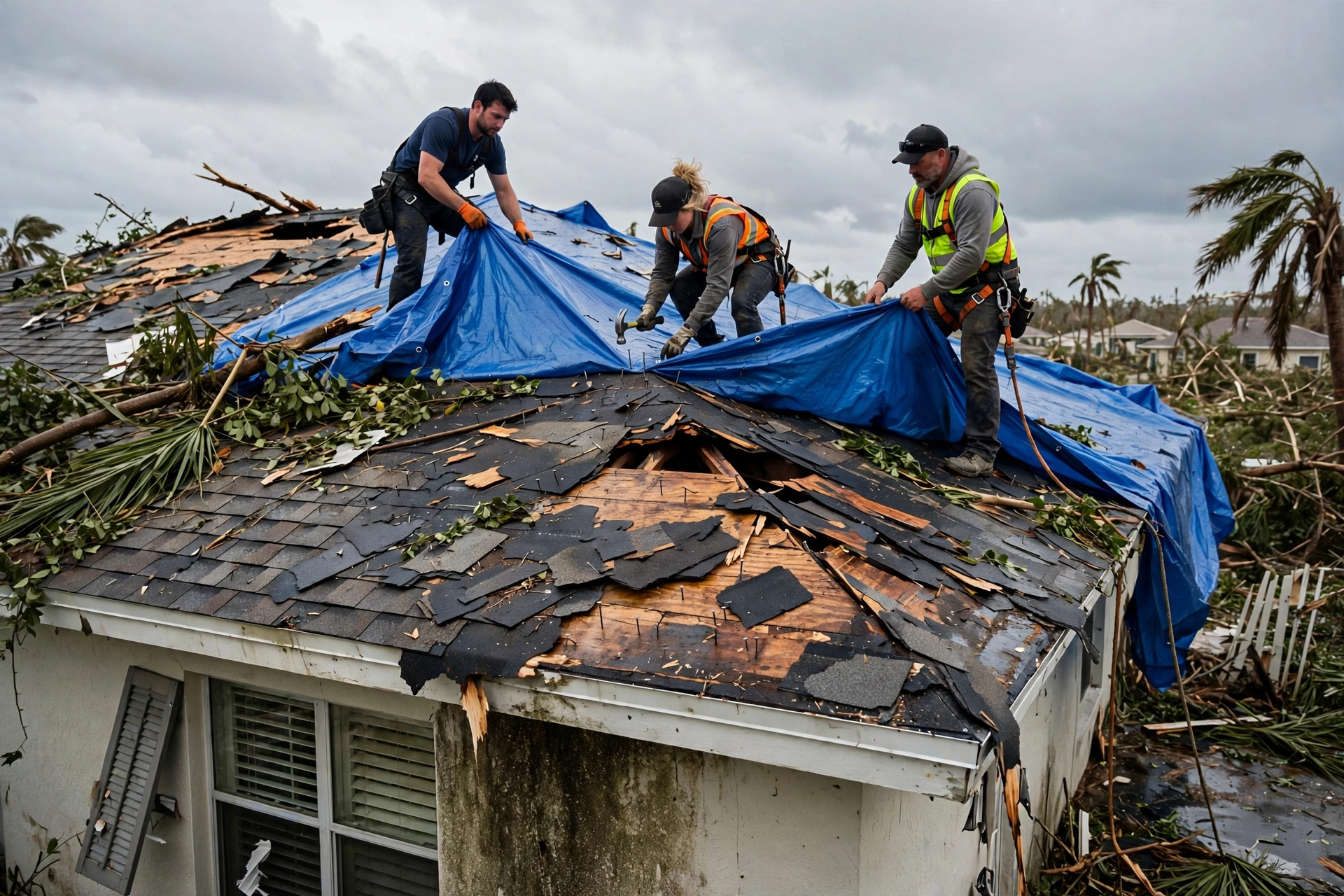
Before the storm: clear drains, secure loose items, know your flood risk and insurance coverage. During: stay out of flooded rooms and never touch water near anything electrical. After: photograph everything before cleanup, tarp damaged roofing immediately, and call for water extraction as soon as roads are passable. Remember that rising water is flood damage, which homeowners insurance does not cover without a separate flood policy.
Every hurricane season, Florida learns the same lesson: wind gets the headlines, but water does the lasting damage. Storm surge fills ground floors, streets flood and push water under doors, and wind-driven rain finds every weak roof, flashing and window. Our crews have worked every major landfall of the last decade, and this checklist is the distilled version of what we wish every homeowner did. Use it before the watch becomes a warning, and bookmark it for after.
Before the storm: how do you prepare your home for hurricane water?
Preparation is water management. Clear gutters, downspouts and yard drains so rain leaves the property instead of pooling against the foundation. Secure anything outside that could become a projectile aimed at your windows, because broken windows are how wind-driven rain gets in. Move valuables, documents and electronics off ground floors in flood-prone areas, and unplug expensive electronics. If you are in a surge or flood zone, know it in advance and have an evacuation plan; water damage is survivable, but only for people who are not in the house when it arrives.
Also handle the paperwork before the storm. Know whether you have flood insurance and what your hurricane deductible percentage is. Save your insurer's claims number in your phone. Photograph every room of your home as a pre-storm baseline; these photos prove what the home looked like before, which makes post-storm documentation far more powerful. Our storm and hurricane FAQ covers the insurance distinctions in detail.
During the storm: what should you do about water inside?
Your safety is the only job during the storm. Stay away from flooded rooms, and never touch standing water that is anywhere near outlets, cords, panels or appliances. If water enters through a damaged roof or windows, contain what you safely can with towels at thresholds, but do not go outside to tarp during the storm. If flooding reaches living space or the electrical system, turn off the main breaker only if you can reach the panel without crossing water, and be ready to leave if water keeps rising. Call 911 for emergencies, not your restoration company, until the storm passes.
After the storm: what are the first steps for hurricane water damage?
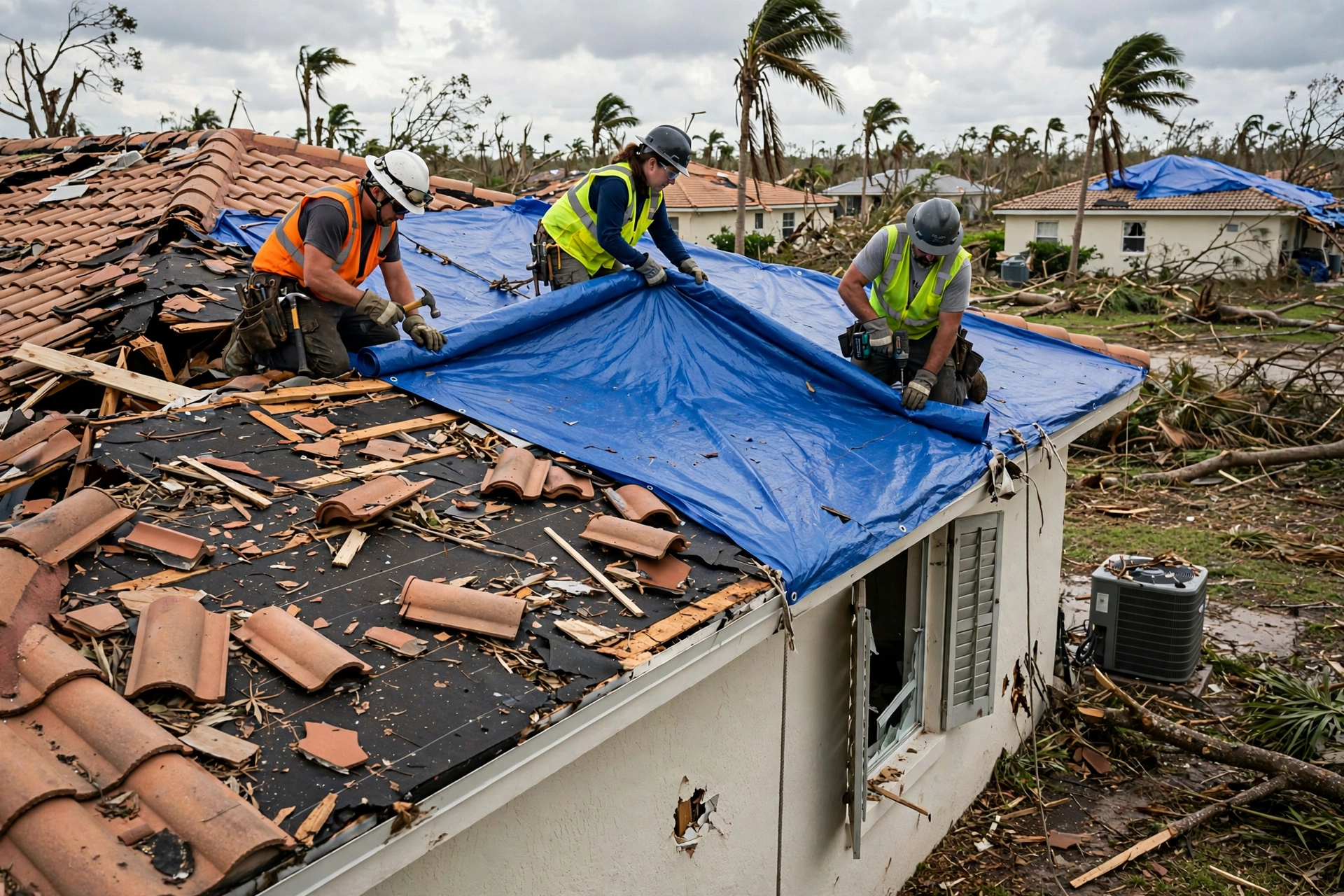
Wait for officials to clear re-entry. Once home, walk the property and photograph everything before moving a single thing: water lines on walls, soaked floors, damaged roofing from the ground, every room. Shut off the main water if plumbing was disturbed and the main breaker if water reached electrical equipment. Then call for help as early as you can: after a major landfall, every restoration company is triaged, and early callers get the first available crews. If roofing is damaged, emergency tarping should happen before the next rain, because Florida's afternoon storms will keep pouring water into an open roof every single day. For the full extraction and drying process, see our flood cleanup service.
How do you handle flooding and storm surge correctly?
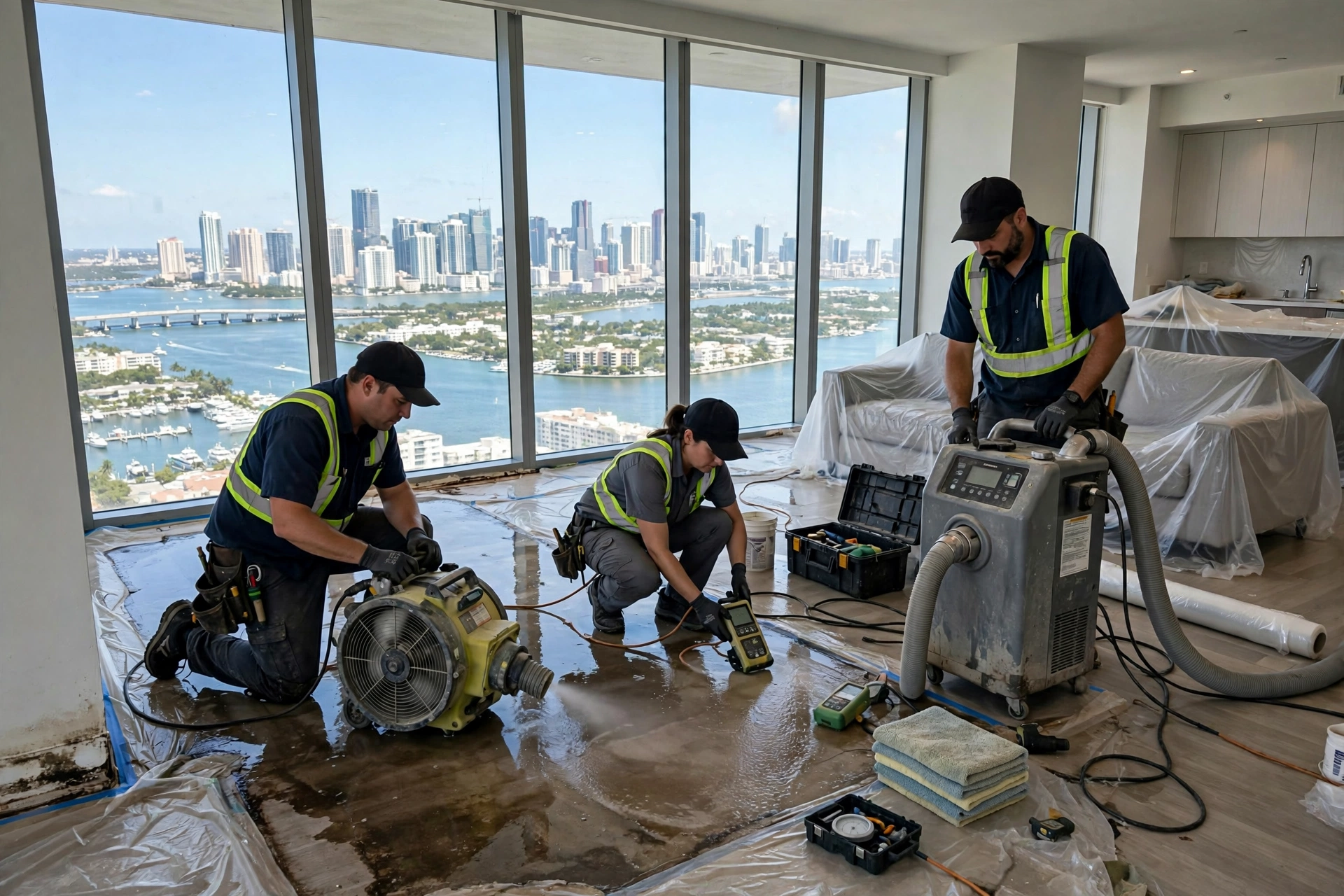
Treat all surge and street flood water as contaminated. Avoid skin contact, keep children and pets completely out of flooded rooms, and do not let anyone wade through it to retrieve belongings. Porous materials that absorbed flood water, drywall below the water line, insulation, carpet and pad, are removed rather than dried in place, which is standard protocol, not overkill. Hard surfaces and framing are cleaned, sanitized and dried to verified meter readings. Your crew documents everything that was removed and why, which matters because flood claims are scrutinized closely, and the documentation is your proof.
Which insurance pays for hurricane water damage?
This is the question that causes the most post-storm confusion, and getting it wrong costs homeowners months. Homeowners insurance typically covers wind-driven rain that entered through storm-created openings, like a roof the wind damaged. It does not cover water that rose from the ground: storm surge, street flooding, overflowing canals. That is flood damage, and it is only covered by a separate flood insurance policy, usually through the National Flood Insurance Program or a private flood carrier. Many storms produce both kinds of intrusion, so your photos of exactly where water entered, roof versus ground floor, decide which policy applies. Florida homeowners have one year from the date of loss to report, and up to 18 months for supplemental claims.
What should you watch for in the weeks after the storm?
The damage you see on day one is rarely the whole story. Wind-driven rain travels inside wall cavities and shows up as stains weeks later. Soaked insulation holds moisture long after surfaces look dry, and in Florida humidity, mold can colonize damp materials within 24 to 48 hours. Watch ceilings for slow-developing stains, sniff for mustiness, and listen to your nose over your eyes. If the storm opened your roof even slightly, every daily downpour is a new intrusion event, which is why tarping matters immediately, not when the full repair is scheduled. Any sign of staining, bubbling paint or musty odor after a storm deserves a free moisture inspection. In our 293 Florida service areas, crews respond locally, so post-storm checks are fast.
What supplies should you stage before hurricane season?
Hurricane season runs June through November, and the supplies that matter most for water damage are boring and cheap, which is exactly why homeowners forget them. A heavy-duty tarp, at least 20 by 30 feet, plus a box of screws, wood battens and a battery drill, lets anyone help a neighbor cover a damaged roof before the next rain band. Keep sandbags or water-activated flood barriers near garage and patio doors if you are in a low area. Stage a battery-powered wet-dry vacuum and several packs of absorbent towels. Charge a portable battery bank, and keep your insurer's claims number, your policy number and your agent's cell saved in your phone, not in a drawer that floods. None of this replaces professional help, but the right supplies in June turn a September disaster into a manageable incident. The crews that answer your call after landfall are the same crews that see every year which homes recover fast and which ones sit wet for weeks.
How do you protect your home's interior when the roof is already damaged?
If water is coming through the ceiling and a crew cannot reach you yet, control the damage from inside. Place buckets and large plastic bins under drips, and lay plastic sheeting or tarps over furniture and electronics in the affected rooms. Poke nothing into the ceiling yourself: bulging drywall holds trapped water and puncturing it releases a flood and risks hitting wiring. Turn off breakers to the rooms below the leak if you can reach the panel safely. Move everything you can out of the wet rooms, and start photographing for the claim while conditions are visible. These interior measures never replace a roof tarp, because every additional rain band adds new water, but they reduce the damage between the storm and the first professional visit. Once crews are on site, the full sequence resumes: emergency response, extraction, verified drying and documented repairs, the same disciplined process that restores thousands of Florida homes after every landfall.