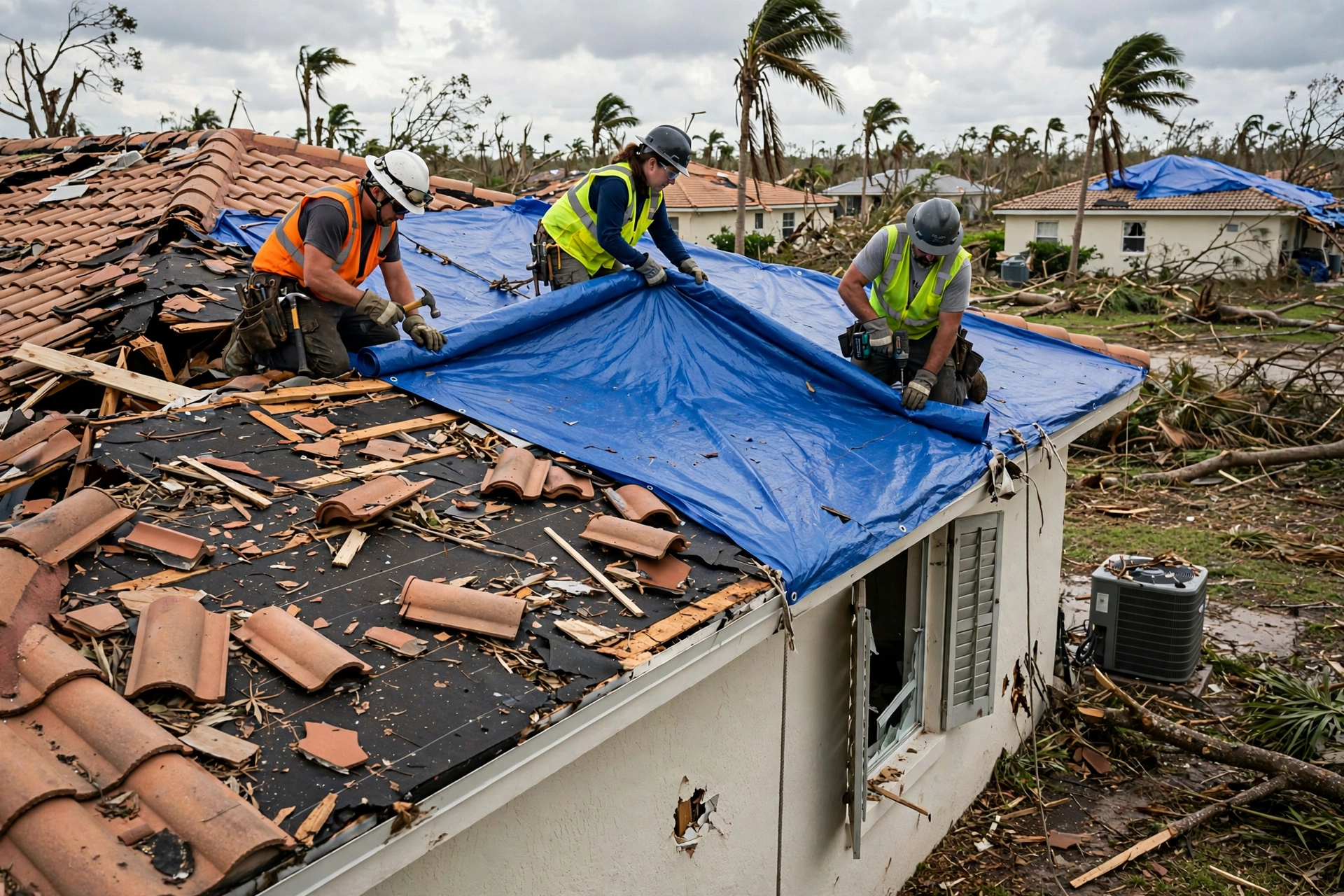
Tarp your roof whenever a storm has torn off shingles or tiles, punctured decking, or damaged flashing, vents or skylights. A properly installed tarp typically costs $500 to $2,500 and prevents the recurring water intrusion that turns one storm loss into weeks of ceiling, insulation and flooring damage. Insurers expect tarping as part of your duty to mitigate.
Storm damage has a cruel second act in Florida. The hurricane moves on, the sun comes out, and then the daily afternoon rain arrives, every day, for weeks. Each shower pushes more water through a damaged roof into insulation, ceilings and walls. By the time permanent repairs happen, the water damage often dwarfs the original roof damage. Emergency tarping exists to break that cycle, and it is one of the fastest, cheapest and most undervalued steps in post-storm water damage restoration.
What roof damage requires tarping after a storm?
Tarp if the storm tore off shingles, tiles or metal panels in any meaningful area, cracked or lifted flashing around chimneys, vents and skylights, punctured the roof decking with limbs or debris, or left creases and uplift that water can drive under. If you can see daylight from the attic, tarping is not optional. Also tarp when you are unsure: water stains appearing on ceilings days after a storm usually mean intrusion is happening now, even if the roof damage looks minor from the ground. Never climb a damaged or wet roof yourself to check; ground photos, attic inspection from inside, or a professional assessment does the job safely.
How does a professional roof tarp installation work?
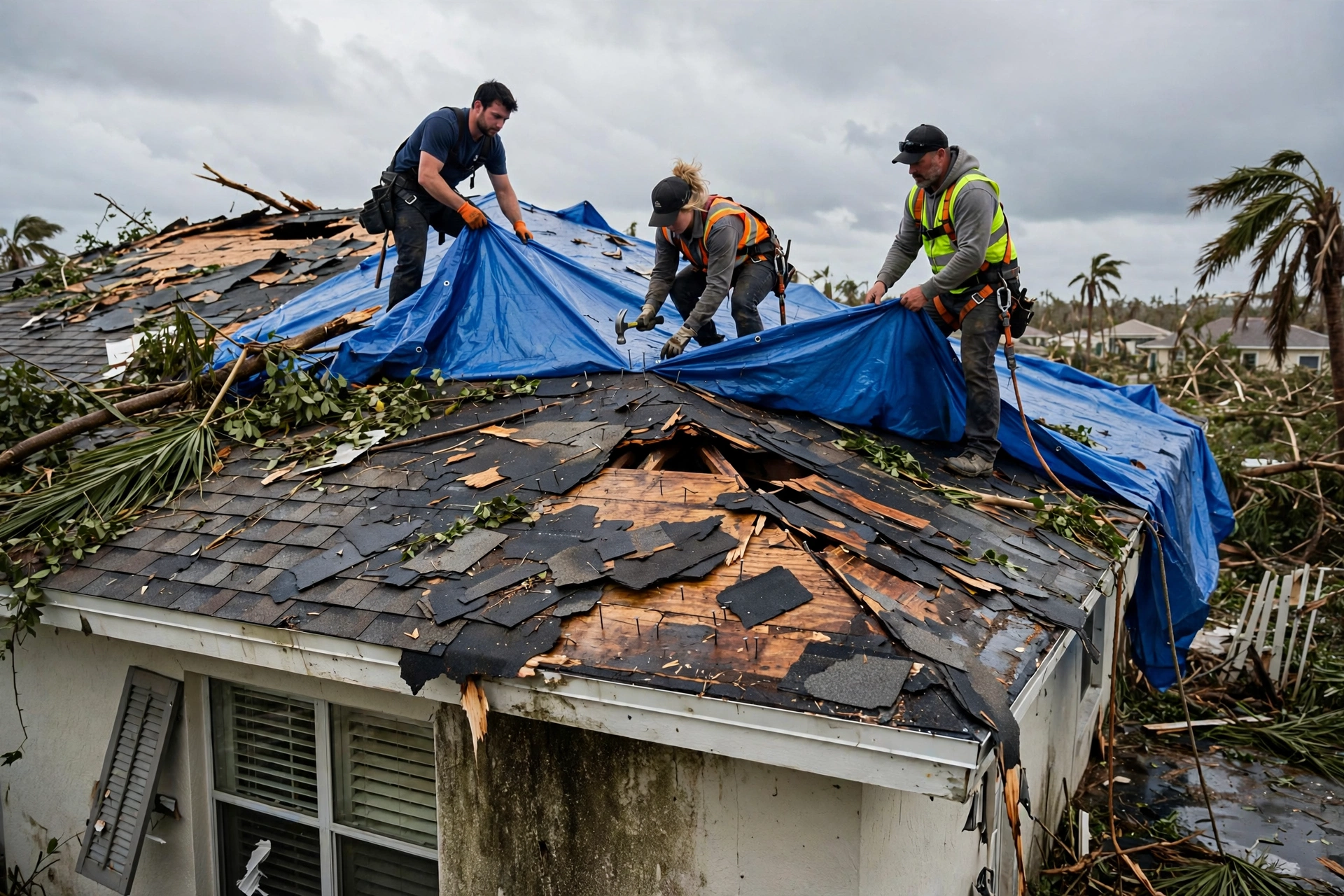
Professionals use heavy-duty woven tarps sized beyond the damaged area so water sheds into intact roofing instead of under the tarp edges. The edges are secured with wood battens and fasteners placed to minimize new holes, sandbags or weighted systems on flat sections, and extra attention to the ridge line where wind grabs. Critically, the crew documents the damage underneath with photos before the tarp goes on, because the adjuster needs to see the pre-tarp condition. A rushed tarp, nailed loosely at the edges, fails in the next storm band and can void the whole effort, so installation quality is the difference between protection and decoration.
How much does emergency roof tarping cost in Florida?
Typical Florida tarping runs $500 to $2,500 depending on the damaged area, roof pitch, height and how urgently the work happens after a major storm. It is one of the best-value mitigations in the business: compare it with the cost of replacing soaked insulation, sagging drywall ceilings, ruined flooring and weeks of structural drying after repeated rain intrusions. When the damage is part of an insured storm loss, reasonable tarping costs are generally treated as legitimate mitigation and are included in claims; keep the invoice and the documentation photos with your claim file.
How long can a roof tarp stay on, and what happens while it is up?
A well-installed tarp buys you weeks to a few months, not a season. Florida sun degrades tarps, wind works at the edges, and every big rain tests the installation, so professional tarps are checked after major rain events and repaired or replaced when they loosen. While the tarp is up, the interior work should proceed: extraction of any water already inside, drying of ceilings and insulation checked with moisture meters, and documentation of the damage for your homeowners claim. Do not let a tarp become an excuse to pause the water damage work; intrusion that already happened is still sitting in your walls aging, and in Florida humidity, mold can start growing within 24 to 48 hours on damp materials.
Does insurance cover tarping, and does it affect your claim?
Generally yes, and it helps your claim rather than hurting it. Homeowners policies require you to take reasonable steps to prevent further loss after damage, and tarping is the textbook example of that duty. Adjusters view documented tarping as a responsible mitigation expense. Two practical points: photograph the roof damage and the finished tarp thoroughly for the claim record, and remember that rain entering through storm-created openings is a homeowners claim, while water that rose from the ground is flood damage requiring a separate flood policy. That distinction decides which claim the interior water damage belongs to, and our storm and hurricane FAQ explains it fully.
When should you skip the tarp and go straight to repair?
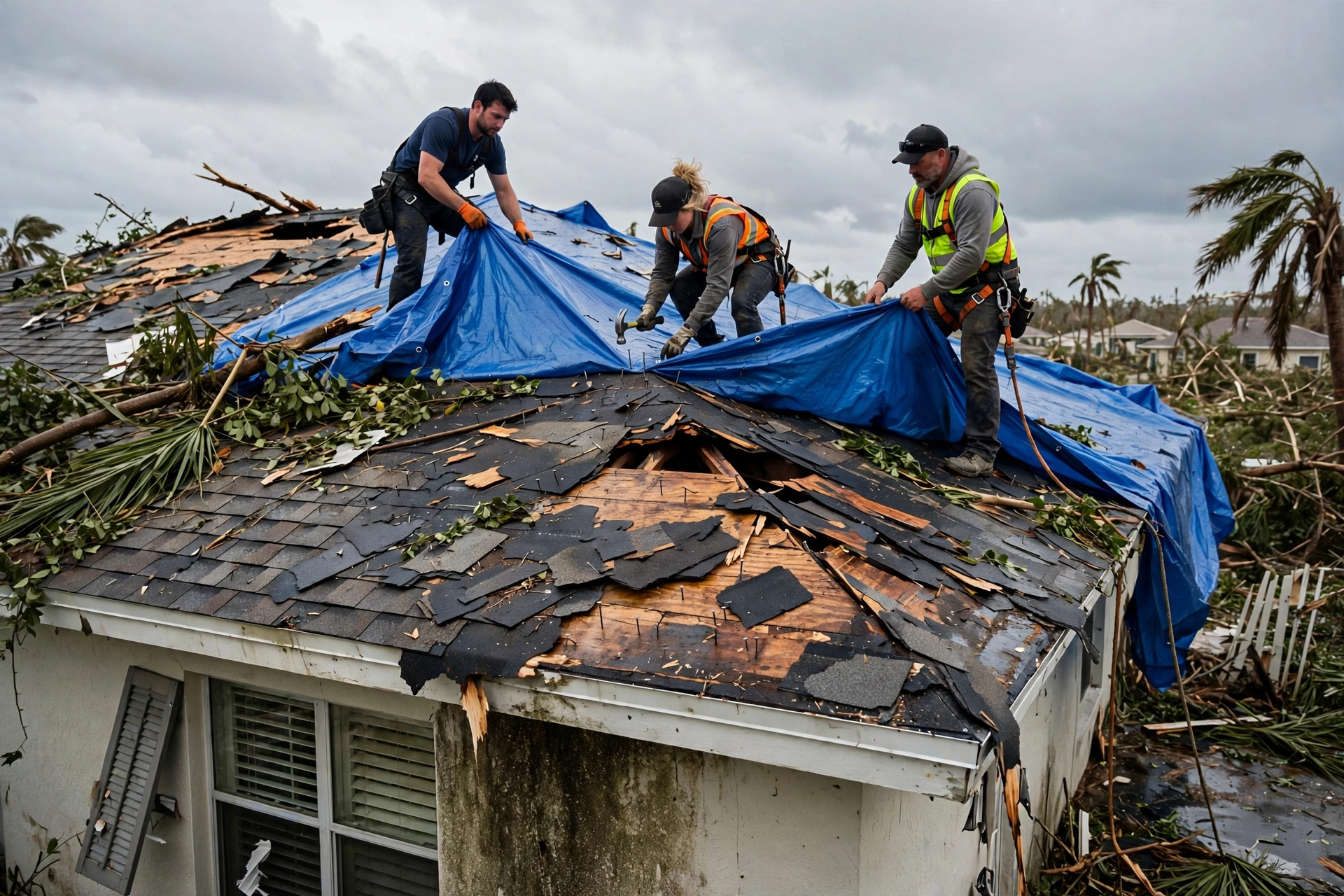
If a roofer can permanently repair the damaged section immediately, tarping is a wasted step. Small, localized damage, like a handful of missing shingles over an attic with no leaks, may only need a same-week repair appointment and an interior moisture check. The tarp decision is really about time and exposure: if repair is days away and rain is hours away, tarp. If the repair crew is available today, repair. In practice after major hurricanes, roofer schedules stretch for weeks, which is why tarping becomes essential and why our crews offer it as part of emergency emergency restoration visits. If your roof took damage anywhere in our Miami, Orlando, Tampa or 293 other Florida cities coverage, call early: the queue after a storm fills fast, and the tarp that goes on today is worth more than the perfect repair scheduled for next month.
Can you tarp a roof yourself, and when should you hire it out?
Technically yes; practically, rarely. A safe self-tarp requires the roof to be dry enough to stand on, a ladder tall enough for the eaves, battens, fasteners and a second person, plus comfort working at height carrying a heavy, wind-grabbing sheet of plastic. A wet, storm-damaged roof is one of the worst places a homeowner can stand: broken decking, hidden soft spots, lifted shingles underfoot. Falls from roofs are a leading cause of post-storm injuries in Florida, and those injuries cost more than any tarp. Hire it out when the damage is above one story, the roof is steep or tile, decking is broken rather than just covering lost, or rain bands are still arriving. Do it yourself only for a small, easily reached section on a single-story shingle roof, in dry weather, with a helper, and treat the result as temporary until a professional inspects it.
What does a proper professional tarp installation include?
Assess first: the crew photographs and measures the damage before anything is covered, because the tarp hides exactly what your adjuster needs to see. Debris and broken limbs come off the roof before the tarp goes down, or they puncture it from underneath. The tarp itself covers the damaged field and extends onto intact roofing beyond every edge, so water sheds onto sound material. Edges are battened down with lumber strips that distribute fastener pressure, which matters on tile and older shingles that crack under point loads. Flat or low-slope sections get sandbag weighting instead of screws where decking is fragile. The installation ends with a documented final state: photos from the ground and from the roof, the invoice, and a note of what the permanent repair will require. That package goes straight into your claim file beside the interior water damage documentation from the restoration work, and it closes the loop: the storm damage is recorded, the intrusion is stopped, the interior is dried, and one file tells the entire story to your insurer.