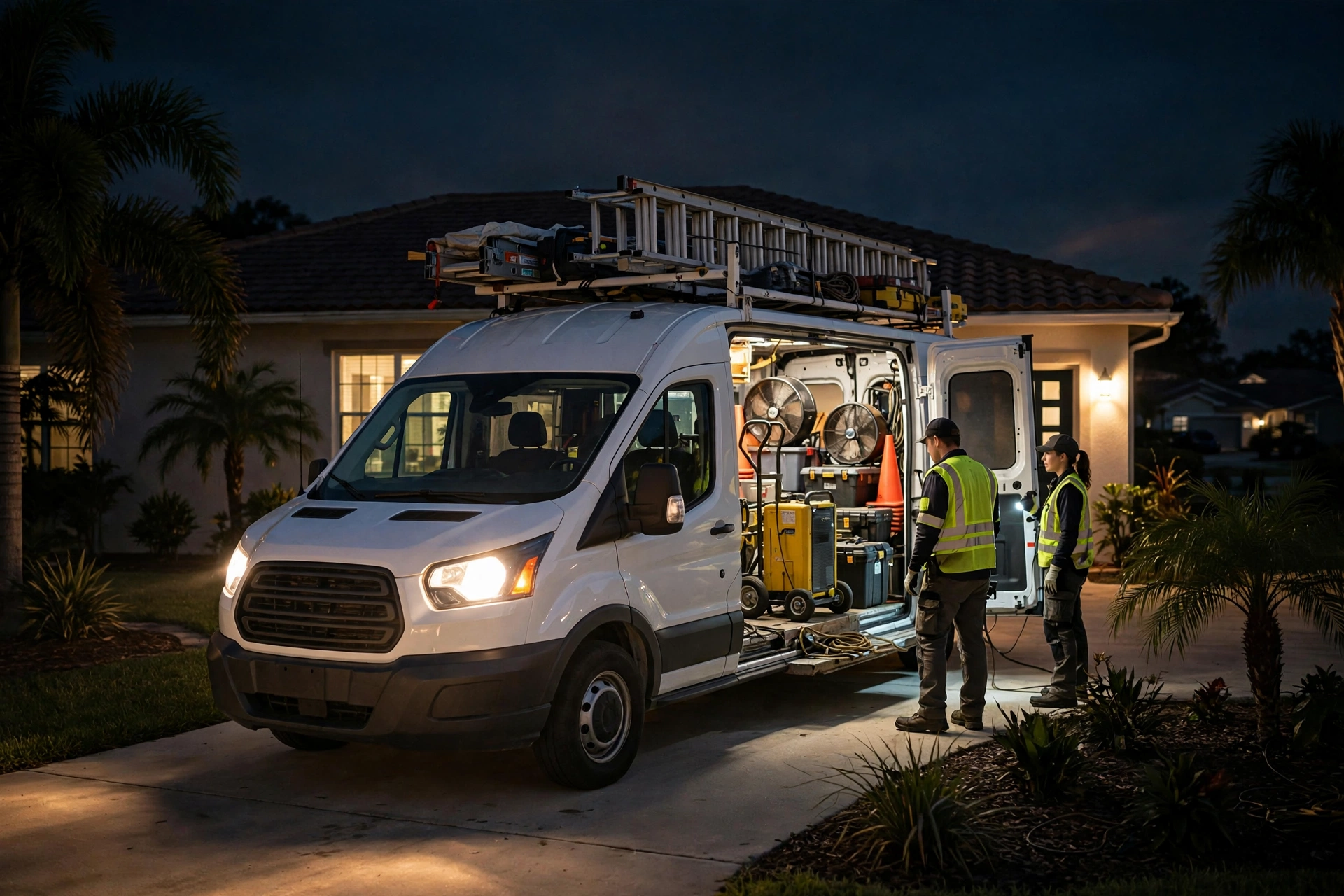
After water damage: stop the water source if it is safe, turn off electricity to the wet area, move valuables out of the water, photograph everything, and call a restoration company immediately. In Florida, fast extraction within hours is what keeps a small leak from becoming mold growth, which can begin within 24 to 48 hours.
You are standing in water in your kitchen, laundry room or hallway, and your brain is doing two things at once: panicking and planning. This guide settles the planning part. Everything below is the order of operations our technicians follow on emergency calls, written for a homeowner doing the first steps alone. If you are reading this while water is still flowing, skip straight to the first section, then call (607) 300-1334 so a crew can start rolling while you work.
What should you do in the first 10 minutes after finding water damage?
Think in three moves: source, safety, valuables. First, stop the water if you can do it without crossing standing water, usually by closing the main shutoff valve or the supply valve at the failing fixture. Every minute a supply line runs, it adds gallons. Second, manage the electrical risk: if the breaker panel is reachable without walking through water, switch off power to the wet area. Third, move what matters most: documents, electronics, rugs, and furniture away from the water. If furniture cannot be moved, wrap the legs in plastic or foil to slow wicking up the wood. These three moves take ten minutes and routinely save thousands of dollars in secondary damage.
While you are at it, open doors between rooms so responders and equipment can move freely later. Do not waste time mopping with bath towels; towels cannot remove enough water to matter, and every minute spent on ineffective cleanup is a minute the water keeps migrating into walls and subfloors. Professional water extraction equipment removes hundreds of times more water than anything in your closet.
How do you shut off the water safely?
There are two levels of shutoff. The targeted shutoff is at the fixture: under sinks, behind toilets and beside washing machines you will find small oval or round supply valves. Turn them clockwise to stop flow to that fixture. If the leak is inside a wall, under the floor, or you cannot reach the fixture, use the main shutoff: on most Florida homes it sits on the exterior wall where the water line enters, often near the front of the house, in the garage, or beside the water meter. Lever handles turn a quarter turn until they sit perpendicular to the pipe; round handles turn clockwise.
The one rule that overrides everything: never cross standing water to reach a valve. If the valve is on the other side of a flooded room, or water is near the panel or outlets, stop and wait for the crew. Tell the dispatcher the source is still running and roughly where, so they bring the right shutoff tools and prioritize speed on your call.
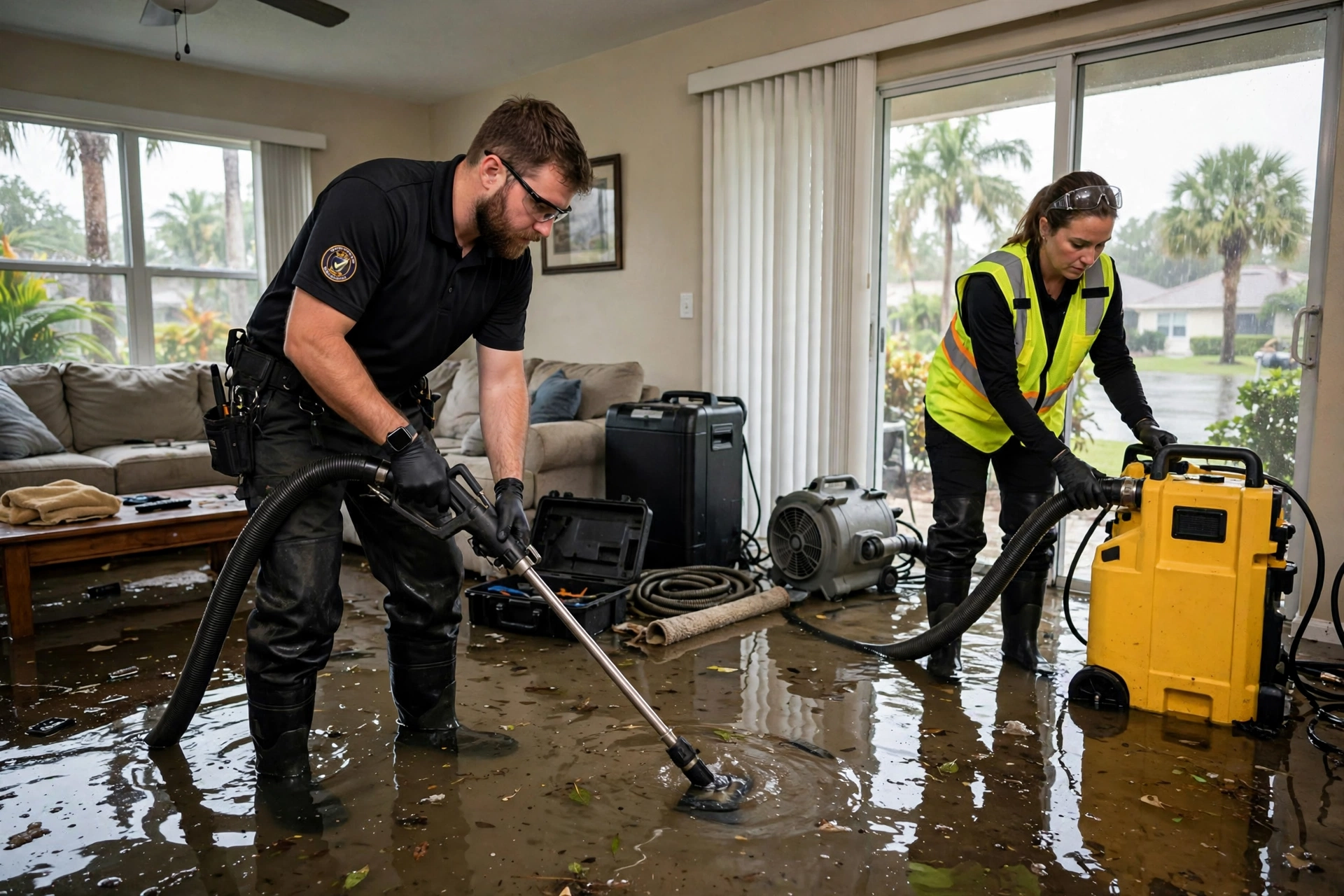
Should you turn off the power after water damage?
Yes, if it is safe to reach the breaker. Standing water touching outlets, power cords or appliances can become energized without any visible sign, and it is one of the most common serious injuries in water emergencies. Switch off the breakers for the affected rooms; if the whole panel area is wet, leave it alone entirely and wait outside. Never touch a wet panel, never pull plugs from submerged outlets, and do not flip breakers back on after the water recedes until a professional has checked the circuits. Water corrodes connections and leaves hazards that persist after the floor looks dry, which is why our water damage safety guide treats electrical risk as the number one priority.
What should you photograph for insurance before cleanup starts?
Photograph before you clean up anything, and this matters more than most homeowners realize. Adjusters make decisions from documentation, and your photos become the permanent record of the loss. Start wide: a video walkthrough of every affected room with spoken narration of the date and what you are seeing. Then go close: the water source or failed part, water lines on walls, soaked flooring, damaged belongings. Open cabinets and closets and photograph inside. If furniture or items must be moved, photograph them in place first.
Keep every failed part, the burst hose, the broken valve, the corroded fitting, even if it is ugly. Adjusters want to see cause as well as damage. Time stamps matter too: your phone already stamps photos, and a quick email of the photos to yourself creates a third-party record of the date. This documentation package is exactly what our crews build professionally on every job, but your homeowner photos are what prove the loss looked like before mitigation began. For the full paperwork picture, read our insurance documentation FAQ.
What should you NOT do after water damage?
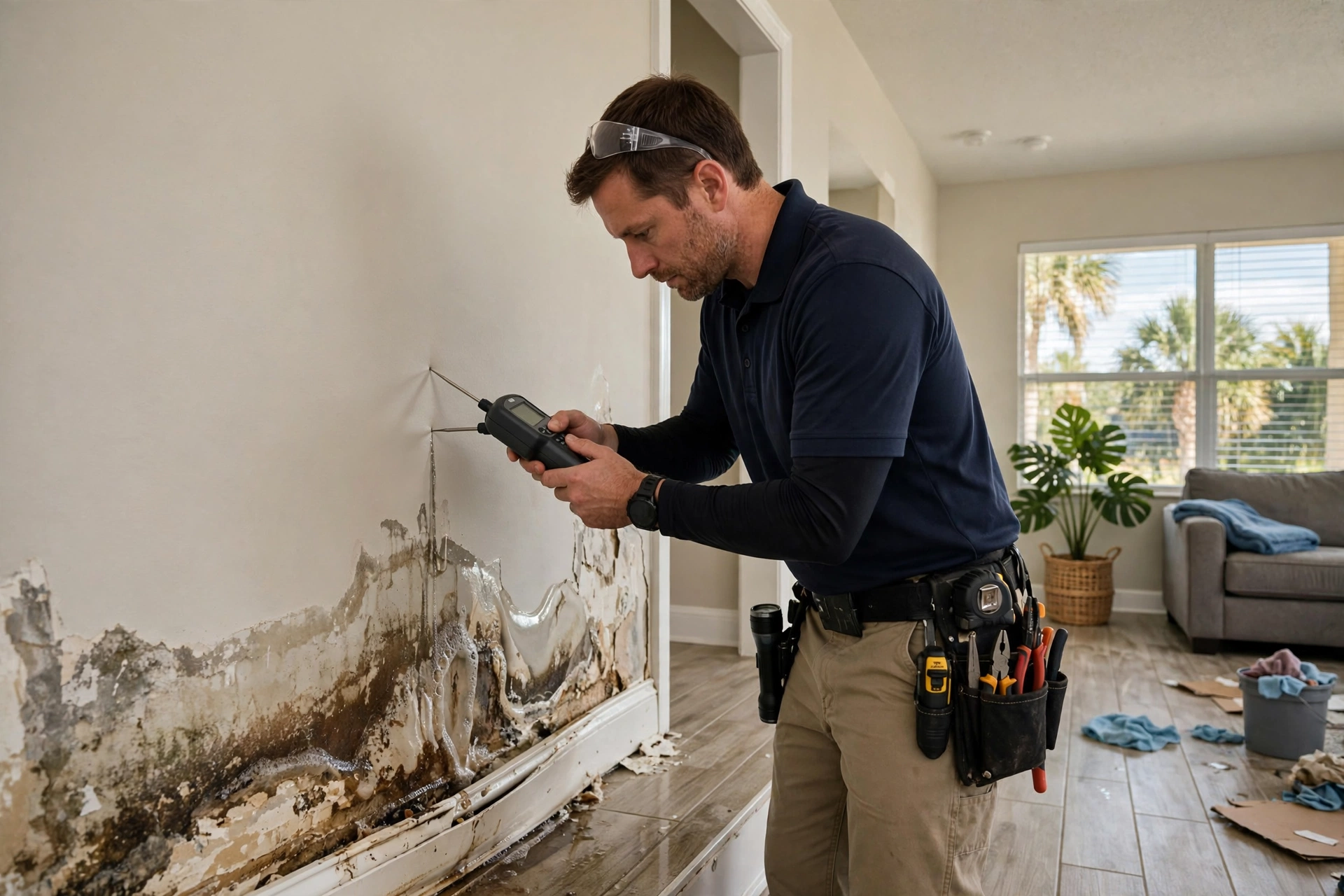
The do-not list is short but important. Do not use a household vacuum cleaner on standing water, which risks electric shock and destroys the machine. Do not run box fans over wet areas hoping to dry things; without dehumidification, all you do is move humid air around, and on contaminated water it spreads the contamination. Do not tear out walls or flooring yourself, because hidden wiring, and trapped water, are exactly where DIY demolition goes wrong. Do not throw away damaged items before they are photographed and listed for the claim. And do not assume a small leak is a small problem: in Florida's humidity, the visible wet spot is almost always the tip of a much larger moisture footprint inside the walls.
When should you call a professional instead of handling it yourself?
Call when the water covers more than a small area you can genuinely towel up in minutes, when water has touched walls or cabinetry, when you cannot find or stop the source, when the water might be contaminated, or when any electrical equipment got wet. Also call when the home will sit empty, because unmonitored drying is where Florida losses quietly double. The line is simpler than it sounds: if water got into building materials rather than just onto a tile floor, you need meters and equipment, not mops. A free inspection costs you nothing and answers the question definitively: we will tell you honestly if the job is small enough for you, and we frequently do.
What happens after you call DryOut Inc?
A live dispatcher takes your details, gives you a real ETA, and tells you what to do while you wait. The nearest crew from our network across 293 Florida cities rolls to your address with extraction and drying equipment. On arrival, the lead technician maps the moisture with meters, confirms the source is stopped, starts extraction immediately, and sets the drying plan. Before leaving that first visit, you get a written scope with a price range, photos, and the first moisture readings, so the insurance documentation is already started and you know exactly what happens next. From there, daily monitoring continues until readings prove the structure dry. That first call is the whole job's turning point, and it is free.
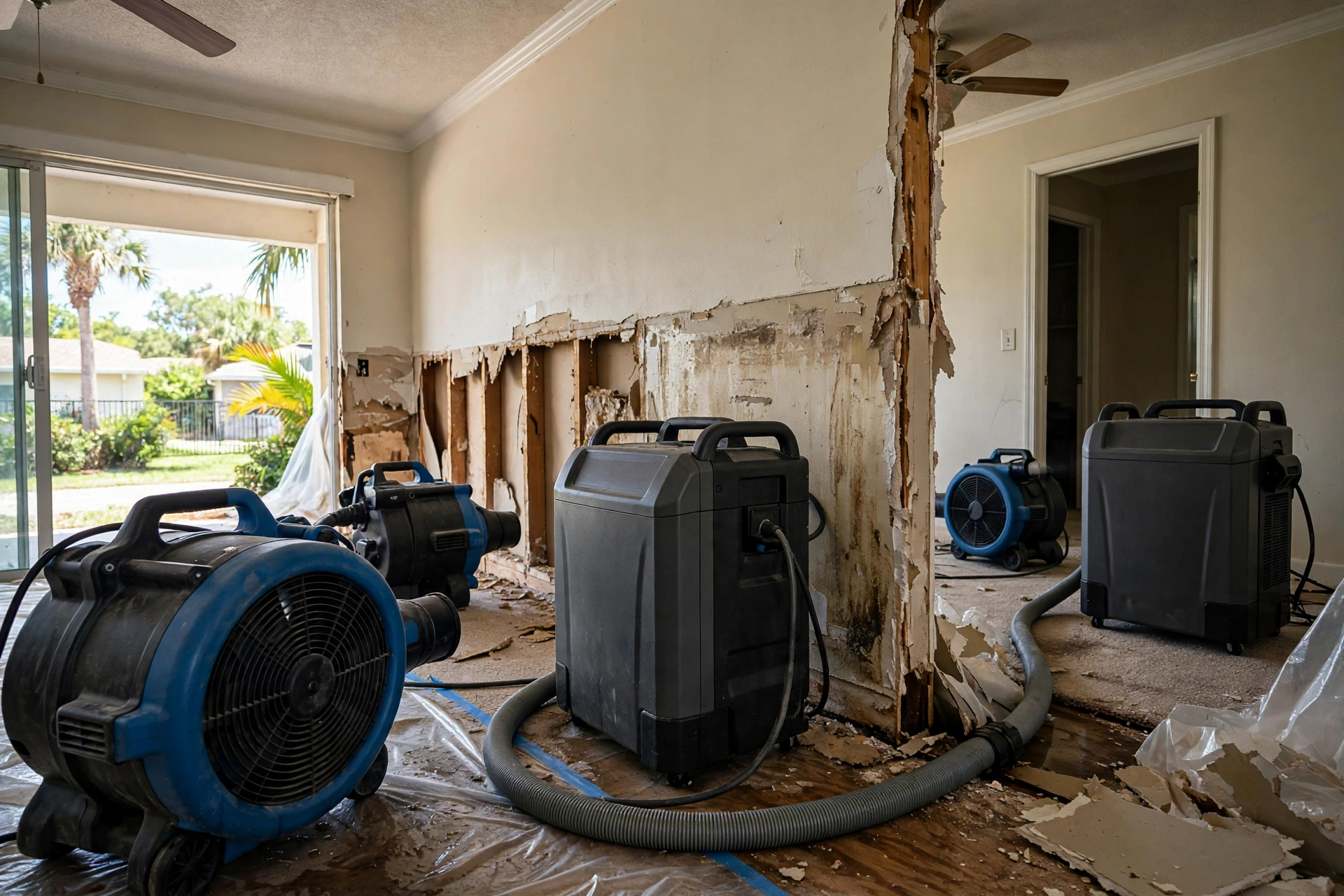
Reminder: If you smell gas, see sparking, or the water is near the electrical panel, get out and call 911 first. Then call us at (607) 300-1334. People before property, every time.