Water Damage Removal vs Restoration vs Cleanup vs Repair: What Is the Difference?
Four terms, four different jobs, one correct order. Removal gets the water out, cleanup makes it safe, repair fixes what broke, and restoration brings the whole property back. Mixing them up costs Florida homeowners time and claim money.
Water damage removal is the extraction of standing water. Water damage cleanup is the cleaning, sanitizing and debris work after the water is out. Water damage repair fixes the materials that failed or were ruined. Water damage restoration is the umbrella term for the whole process, from the first pump to the final coat of paint, done in that order.
What is water damage removal?
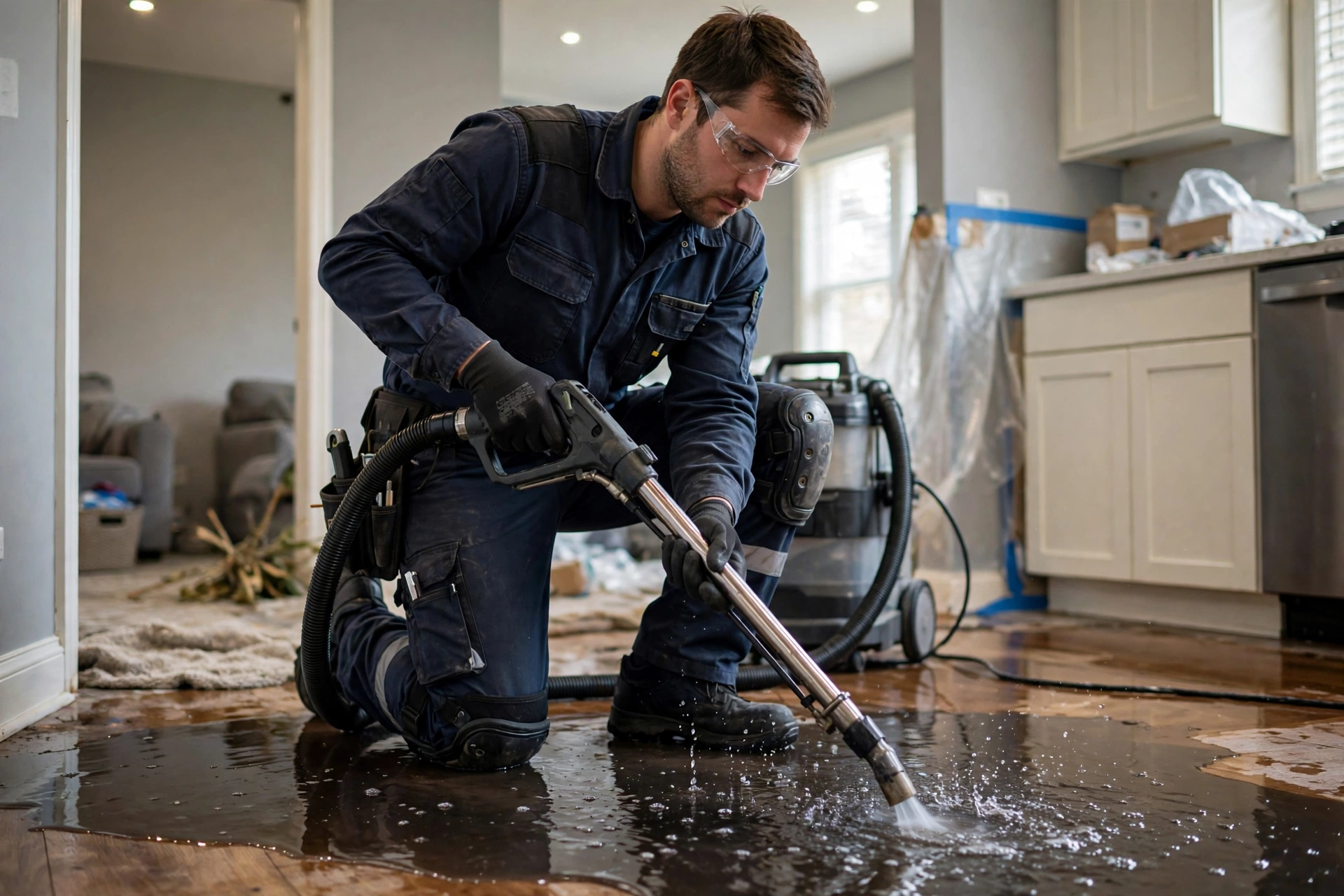
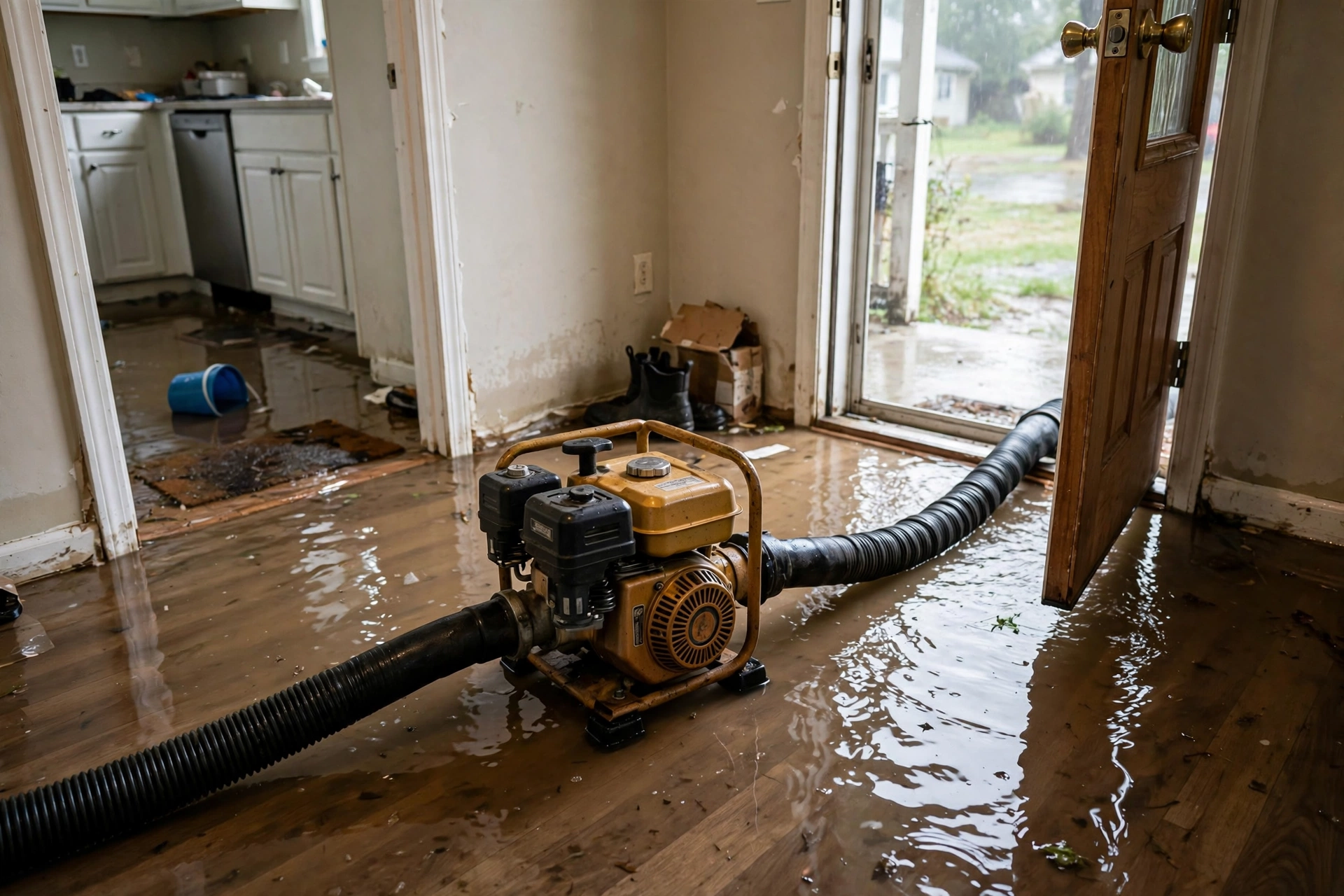
Removal, also called extraction, is step one and nothing else works until it is done. Truck-mounted extractors, submersible pumps and weighted extraction tools pull standing water out of carpet, tile, concrete and wall cavities. Crews also move or block furniture and find the water that has already traveled under floors. The goal is simple: no bulk water left anywhere, because every gallon left behind keeps soaking into drywall, subfloor and insulation.
This is the phase most people picture when they search for water removal services, and it is priced mostly by volume and area: how many rooms, how deep, and how fast the source was stopped. Our water extraction page shows what a removal visit actually includes.
What is water damage cleanup?
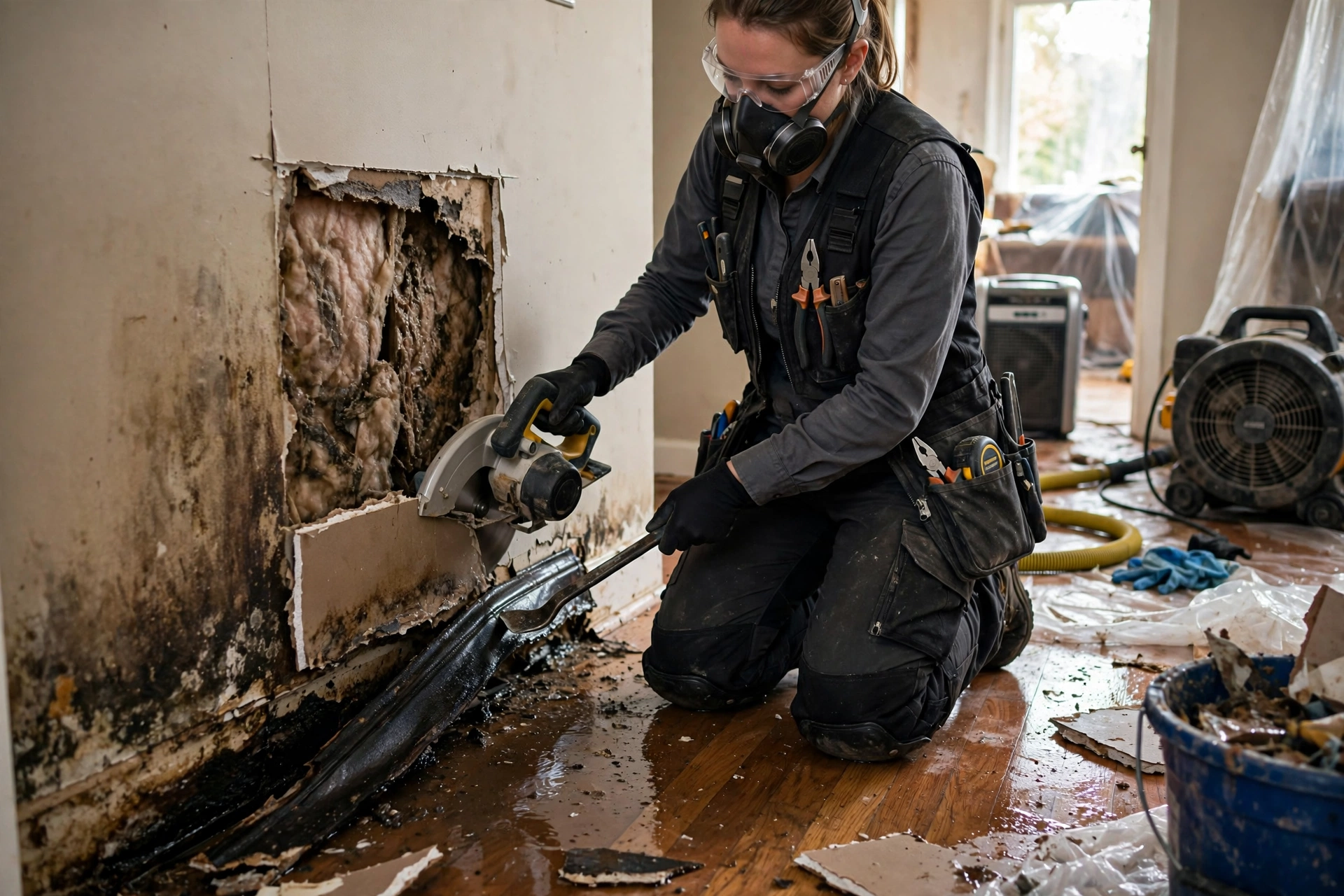
Cleanup starts once the water is out. It covers removing ruined materials that cannot be saved (soaked carpet pad, crumbling drywall, swollen baseboards), washing and sanitizing affected surfaces, antimicrobial treatment, and hauling debris. Category matters here: clean supply-line water needs basic cleaning, while floodwater and sewage need full decontamination protocols, because they carry bacteria and chemicals into every surface they touch.
In Florida, cleanup has one hard deadline. Mold can begin growing within 24 to 48 hours of a water event, so the gap between removal and cleanup is not a scheduling detail, it is the difference between a cleaning job and a remediation job. Our flood cleanup service is built around that clock.
Where does drying fit in?
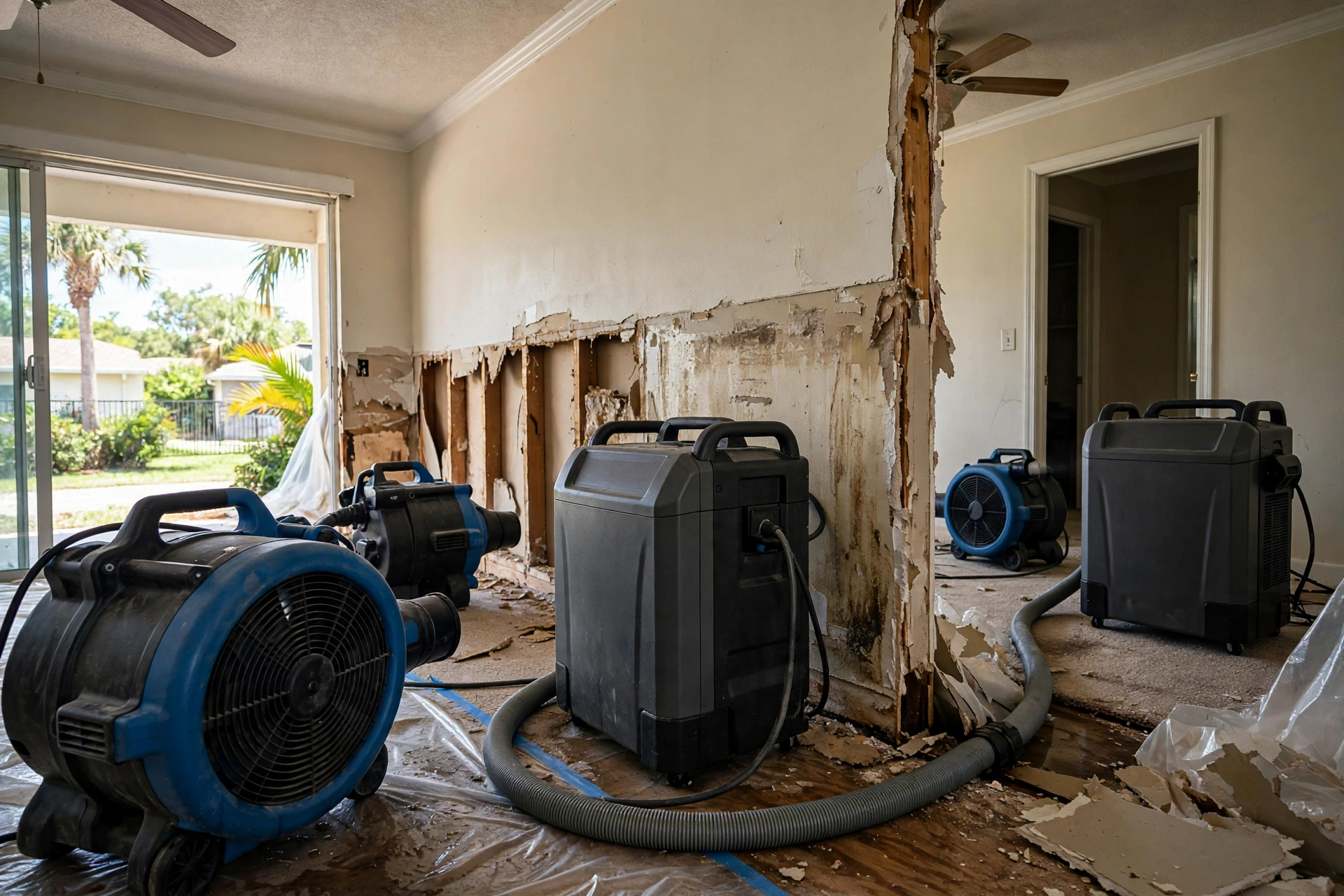
Between cleanup and repair sits the phase homeowners underestimate most: structural drying. Air movers and commercial dehumidifiers run for several days while technicians track moisture with meters and thermal imaging, following IICRC S500 standards, until wood, drywall and concrete hit verified dry targets. Skipping monitored drying is how a "fixed" room grows mold inside the wall six weeks later. It is a separate line item on most quotes, and it deserves to be. See how structural drying is measured and documented.
What is water damage repair?
Repair is the rebuild: replacing drywall and insulation, relaying flooring, reinstalling baseboards and cabinets, and repainting. It also includes fixing the original failure, a burst pipe, a failed water heater, a leaking AC drain, though the plumbing fix itself is sometimes a separate trade call. Repair is the phase with the widest price range, because it depends on finishes: builder-grade vinyl and custom hardwood are both "floor repair" on paper.
So what is water damage restoration, exactly?
Restoration is the name for the entire sequence managed as one job: removal, cleanup, drying, repair, and the documentation that ties them together. When a company offers water damage restoration, it should mean they handle or coordinate every phase, not just the first truck visit. That distinction matters when you compare quotes: a cheap removal-only quote looks better than a full restoration quote until the drying, cleanup and repair bills arrive separately.
How do insurers treat the four phases differently?
Adjusters split claims along exactly these lines. Mitigation (removal, cleanup, drying) is usually approved fast because it prevents further loss, and most policies actually require you to mitigate. Repair is scoped separately and paid against estimates and documentation. This is why the paperwork from phase one matters: moisture maps and dated photos from the removal visit are the evidence the repair payment depends on. In Tampa and across Florida, the best-documented claims are the ones where one company handled the sequence from the first hour.
What does each phase roughly cost in Florida?
Removal typically runs $3 to $7 per square foot of affected area. Cleanup and sanitizing add $1 to $3 per square foot, more for contaminated water. Monitored drying is usually billed per day of equipment, and repair ranges from a few hundred dollars for a small drywall patch to five figures when flooring and cabinets are involved. A full single-room restoration commonly lands between $1,500 and $7,000 depending on category and finishes.
How long does each phase take?
Extraction is fast: a few hours for most homes, a full day for deep or multi-room flooding. Cleanup and selective demolition usually finish the same day or the next. Drying is the slow phase, three to five days of monitored equipment for typical losses, longer for hardwood and wall cavities. Repair stretches from two days for a drywall-and-paint room to several weeks when flooring, cabinets or custom finishes are involved. The phases overlap at the edges, but the order never changes, and trying to repair before drying targets are verified is how hidden moisture gets sealed inside walls.
Can you skip a phase to save money?
Homeowners ask this on almost every job, and the honest answer is that skipping is the most expensive option on the menu. Skip monitored drying and the rebuild traps moisture that feeds mold growth, which then needs licensed remediation at several times the drying cost. Skip proper cleaning after contaminated water and odors and bacteria stay in the structure. Skip documentation and the insurer reduces the claim. The phases exist in this order because each one protects the next. What you can legitimately do is scale the repair phase: choose simpler finishes, or delay cosmetic upgrades while the structure is made safe and dry.
Which phase does your home need right now?
It depends on the hour. Standing water still visible means you are at phase one, whatever the clock says. Water gone but walls and floors still damp means cleanup and drying. Dry readings on a meter, with damage visible, means you are finally at repair. A proper first visit sorts this out in about thirty minutes: the source confirmed stopped, moisture mapped with meters and thermal imaging, and a written sequence with prices per phase. If a company quotes the whole job without that inspection, they are guessing at your expense.
Not sure which phase your home needs?
We handle the full sequence, removal through final repair, with one call and one documented claim file. Free inspections across 293 Florida cities, 24/7.
Call 24/7: (607) 300-1334